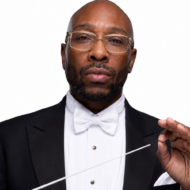

By Jarvus Ricardo Hester
I was three years old when I first told my mother, “Let’s take it on the road.” She was directing the church choir’s Christmas play, and I’d just finished my solo. Everyone laughed, but I wasn’t joking. Even then, I understood something about performance — about that electric moment when your soul catches light in front of people.
Since then, I’ve played kings, slaves, angels, and men undone by love. I’ve been Mozart’s Don Giovanni and Verdi’s Porgy. I’ve died more times than I can count — on stage, in spirit, and sometimes in silence.
But lately, I’ve been asking myself: what do you do with all the characters you’ve played?
Where do they go when the curtain falls? Do they live in your body, waiting to be called again? Or do they haunt you, reminding you of who you used to be?
The Performance Beneath the Performance
As a gay Black man in opera, I’ve had to play more than roles. I’ve played expectations. I’ve played dignity when the industry gave me discrimination. I’ve played confidence when the world whispered that someone like me didn’t belong in Mozart or Puccini.
You learn to shape-shift early — to become what people can handle.
But what no one tells you is how heavy that gets over time. Every role asks for a piece of you. Every aria requires a truth you can’t fake. Eventually, you look in the mirror and see a collage — a chorus of all the selves you’ve been.
Deconstructing the Mask
In therapy, my counselor asked me, “Who are you when you’re not performing?” I couldn’t answer.
I realized I’d spent my life becoming everyone else — a tenor, a teacher, a son, a symbol — and I’d misplaced my own name somewhere between rehearsals.
Deconstruction isn’t glamorous. It’s quiet, painful work. It means taking apart what the world applauded and finding what you actually believe underneath. It means forgiving yourself for surviving through performance, and learning to live without needing to be seen all the time.
Art as Healing
Now, at 47, I approach each role differently. I no longer perform to escape myself — I perform to return to myself. Each song becomes a prayer, each phrase a breath of reconciliation between the artist and the man.
Sometimes I still feel the ghosts of old characters. They visit me like old friends — the broken ones, the regal ones, the ones who taught me how to love through sound. But I no longer let them run the show. I thank them, and then I sing for me.
The Final Bow
Mental health for artists isn’t just about managing stress; it’s about reclaiming identity. It’s learning to exist beyond applause.
If I could tell that three-year-old boy anything now, I’d say:
Yes, let’s take it on the road — but let’s also learn how to come home.