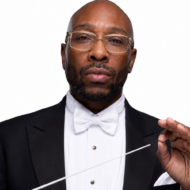

A decade of celebrating artists who refuse to accept the boundaries between genres.
By Jarvus Ricardo Hester
For generations, the violin has occupied a very specific place in the public imagination.
Concert halls.
Symphony orchestras.
Formal recitals.
Black attire.
Printed programs.
Yet one of the most exciting developments in American music over the past decade has been watching a new generation of Black string musicians challenge those expectations.
The violin has never belonged to a single tradition.
And neither have the artists redefining it.

This year marks the tenth anniversary of the Black Fiddler Music Festival, a celebration of Black string musicians whose work continues to expand the possibilities of classical music.
What makes the festival so compelling isn’t simply its longevity.
It’s its philosophy.
The artists featured aren’t interested in protecting artificial boundaries between musical styles.
They’re interested in exploration.
Classical music meets jazz.
Jazz meets hip-hop.
Hip-hop meets R&B.
And somewhere in the middle, something entirely new begins to emerge.
For too long, conversations about classical music have focused on preservation.
How do we preserve traditions?
How do we protect the repertoire?
How do we maintain the canon?
Those are important questions.
But they’re incomplete.
Because classical music has never been static.
Mozart experimented.
Beethoven challenged convention.
George Gershwin blurred the lines between classical music and jazz.

Innovation has always been part of the tradition.
Black musicians have long understood this.
From spirituals to jazz, from gospel to blues, Black artists have consistently transformed existing forms into entirely new musical languages.
String players are no exception.
Today, violinists are sampling beats.
They’re collaborating with DJs.
They’re performing alongside spoken-word artists.
They’re building audiences on social media.
And they’re introducing classical instruments to listeners who may have never attended a traditional concert.
Perhaps that’s why festivals like Black Fiddler feel so important.
They create space.
Space for experimentation.
Space for collaboration.
Space for artists to reject the false choice between honoring tradition and embracing innovation.
Because the future of classical music isn’t found in choosing one over the other.
It’s found in understanding that both can exist simultaneously.
This conversation is particularly important for young musicians.
Too often, emerging artists feel pressure to choose a lane.
Classical or contemporary.
Conservatory or commercial.
Traditional or experimental.
But some of the most influential musicians in history refused to make those choices.
They created their own categories.
And that’s exactly what’s happening here.
The Black Fiddler movement isn’t attempting to redefine classical music by abandoning it.
It’s expanding it.
It’s inviting more voices into the conversation.
And perhaps that’s the greatest lesson of all.
Music isn’t diminished when new influences enter the room.
It’s enriched.
Ten years after its founding, the festival continues to remind audiences that the violin is far more versatile than many people realize.
It can sing.
It can improvise.
It can accompany.
It can lead.
And in the hands of visionary artists, it can tell stories that transcend genre entirely.
The next decade promises even greater possibilities.
Because when artists are given the freedom to experiment, extraordinary things happen.
And if the first ten years of Black Fiddler have taught us anything, it’s this:
The classical canon isn’t a finished document.
It’s still being written.
by Jarvus Ricardo Hester

Stay in the Mood
The story doesn’t end here.
Continue exploring Mood Magazine NYC, where food, culture, travel, wellness, style, business, and community come together to tell the stories shaping Harlem, New York, and the world.
Listen to WHRL Mood Radio Harlem and continue the conversation on The Morning Show NYC and After Hours NYC, where the stories behind the headlines become deeper conversations about how we live, what we value, and where we’re going next.
Follow us across our social channels and join the conversation on Threads, where every story becomes an invitation to share your perspective, discover something new, and become part of the community we’re building.
Because at Mood, we don’t just publish stories.
We build conversations.
Listen. Read. Experience.
Let us curate your mood.