
In a world that never stops moving, there are those rare moments that remind us that stillness and motion are not opposites — they are choices. This week, in the heart of Harlem, I witnessed such a moment. I watched the walking monks online.
They walked not as a spectacle, not for attention, and not for applause. They walked with intention, each footfall deliberate, each breath measured, each step a prayer. In a city defined by urgency and velocity, their quiet procession was a striking counterpoint: an insistence that peace, like art, must be cultivated, practiced, and embodied.

Walking meditation, or kinhin as it is known in Zen traditions, has existed for centuries. For monks, the act of walking is far more than a form of exercise or travel. It is a spiritual practice. In the quiet repetition of each step, one aligns body, mind, and spirit. As Thich Nhat Hanh, the Vietnamese Buddhist monk and peace activist, has said, “Walk as if you are kissing the Earth with your feet.” The monks in Harlem carry this same discipline into the streets, transforming ordinary sidewalks into sacred space.
Historically, walking has been a central practice in many monastic traditions. In Japan, Chinese Chan monasteries, and Tibetan Buddhist communities, walking meditation balances seated meditation and daily chores. It trains patience, fosters awareness, and strengthens a connection to the world while maintaining detachment from distractions. In the United States, walking monks have been seen as spiritual ambassadors, bridging the contemplative traditions of Asia with the lived realities of urban spaces.

One of the monks explained it simply: “Our walk is our prayer. Our presence is our teaching. When we walk, we practice peace — and it is contagious. It spreads by example.” That idea — that peace can be transmitted through the simple act of moving with awareness — resonates deeply in a city where pace and pressure often define success.
As we prepare for the Road to the Apollo — bringing artists to campuses, communities, and cultural institutions — the example of these monks is both a guide and a challenge. How do we carry intention in every performance? How do we embed discipline into our craft while remaining connected to our audiences? How do we walk through our own lives with purpose, visible or unseen?
For the luxury traveler, for those who seek experiences that merge culture, spirituality, and artistry, these moments are rare and revelatory. To observe the walking monks is to witness a harmony of motion and stillness, a reminder that mindfulness is not limited to quiet rooms or retreat centers. It can exist on the streets of Harlem, in the rhythm of a city, and in the disciplined steps of those who choose to embody peace.
In a photograph by Stuart, the monks’ shadows stretch across the sidewalk, elongated and deliberate, echoing the very cadence of the city around them yet untouched by its noise. There is elegance in their simplicity, luxury in their restraint, and power in their quiet authority.

As you walk the streets of Harlem, or any city with intention, notice how movement shapes presence. The walking monks offer more than a lesson in discipline; they offer a blueprint for living with purpose. For those traveling not just to see, but to experience, the intersection of culture, spirituality, and movement offers a moment of reflection — a pause in a world that rarely stops.
In their steps, one finds a meditation, a discipline, and an art form. And perhaps most importantly, one finds a reminder: the journey is as sacred as the destination.
Photo: Stuart Dance
IG: @ApertureAndAtlas | @StuartDance
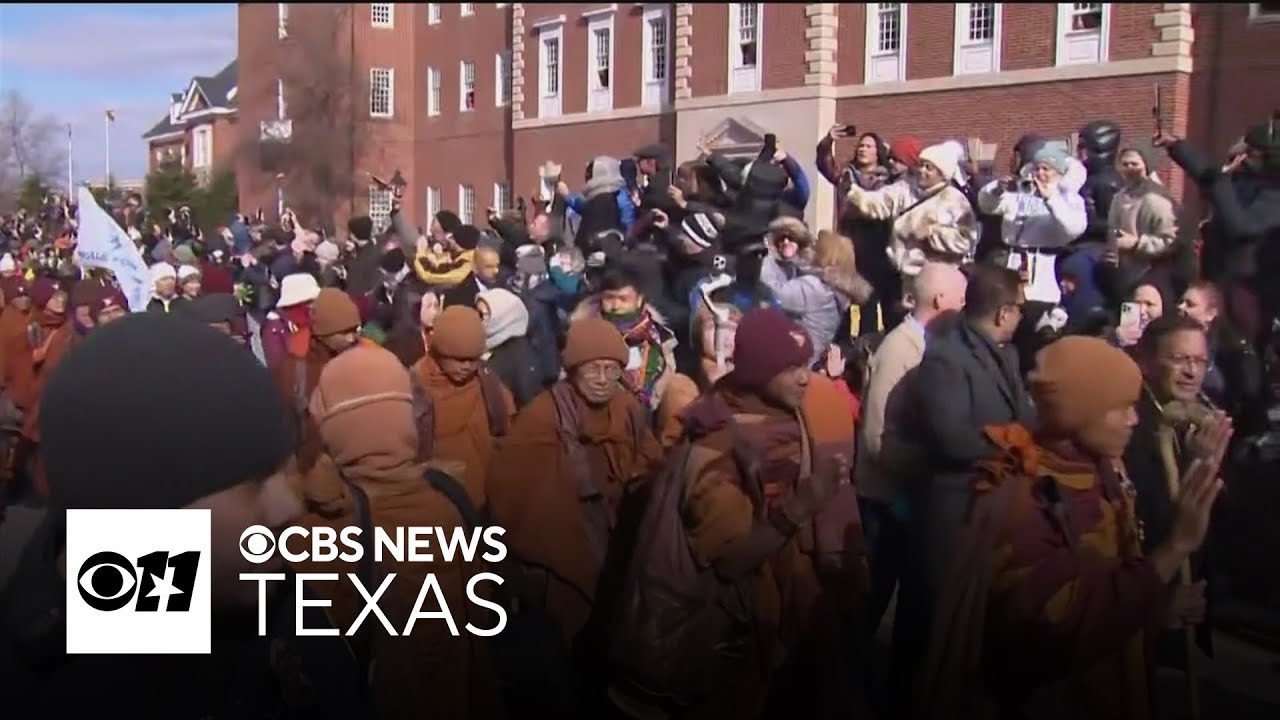
“Our walk is our prayer. Our presence is our teaching. When we walk, we practice peace — and it is contagious. It spreads by example.”

This story expands in a long-form feature explore Mood Magazine online.
Subscribers get full access. Start your 7-day free trial.
Listen to the extended audio feature with cultural context, music analysis, and discussion of the series’ lasting impact. Streaming now on the Mood Radio front page.
Follow the Voices in The Poets
The Poets is our upcoming show centering writers, spoken word artists, and storytellers shaping culture in real time. Discover new voices, submit your work, and follow the launch.
Mood is reader- and listener-supported. Subscribe to sustain the work. Volunteer to help build what’s next. Share stories that matter. However you join, you belong here.