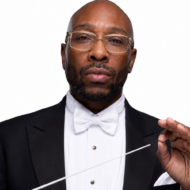

The enduring legacy of Dion E. Clarke and the power of creating opportunities for others.
By Jarvus Ricardo Hester
Mood Magazine NYC
There are people who create art.
There are people who collect art.
And then there are the visionaries who make it possible for artists and collectors to find one another.
Dion E. Clarke was one of those visionaries.
His greatest contribution to Harlem wasn’t a painting hanging on a gallery wall. It was the room itself—a place where artists could be seen, celebrated, and supported, and where everyday people could discover that collecting Black art wasn’t reserved for museums or millionaires.
It belonged to all of us.

The Harlem Fine Arts Show wasn’t simply an exhibition. It was an experience.
You could wander through the galleries, stop in front of a painting that refused to let you walk away, strike up a conversation with the artist, and leave seeing the world a little differently than when you arrived.
That’s what great art does.
It changes us.
But here’s the thing about Harlem—it has never been short on talent.
From the Harlem Renaissance to today, this neighborhood has produced extraordinary painters, musicians, actors, writers, dancers, and visionaries. What every generation needs, however, are people willing to build platforms where those artists can thrive.
Dion E. Clarke understood that.
Long before supporting Black artists became a corporate initiative or a marketing slogan, he was creating spaces where Black excellence was expected, celebrated, and collected.
He believed artists deserved more than applause.
They deserved opportunity.
As news of his passing spread through Harlem’s cultural community, many remembered the exhibitions, the conversations, and the introductions that changed careers and inspired collectors. His work proved that one person with a clear vision can strengthen an entire cultural ecosystem.
That’s a remarkable legacy.
It also raises an important question.
Who are we celebrating today?

Too often we wait until someone is gone before we tell them how much their work mattered. We hold tributes after the applause has ended instead of offering encouragement while people are still building.
Perhaps Dion E. Clarke leaves us with a gentle reminder:
Celebrate people while they can still hear your gratitude.
Support artists while they’re still creating.
Visit galleries before they’re discovered by everyone else.
Buy the print.
Attend the exhibition.
Start the conversation.
Because culture doesn’t survive by accident.
It survives because ordinary people decide it’s worth preserving.
Your Mood Assignment
This week, visit a local gallery.
Talk with an artist.
If a piece moves you, ask about it.
You don’t have to become an art collector overnight.
Just become curious.
Sometimes curiosity is the beginning of a lifelong appreciation for beauty.
Join Today’s Conversation
Today’s question on Threads is simple:
Who is someone in Harlem whose legacy deserves to be celebrated while they’re still here?
Tell us why.
Follow @TheMorningShowNYC and @MoodMagazineNYC on Threads. We may feature your response during a future edition of The Morning Show NYC.
Continue the Conversation on WHRL Mood Radio Harlem
This article was inspired by today’s conversation on The Morning Show NYC with Jarvus Ricardo Hester.
If you missed today’s broadcast, you can still hear the full episode during our encore presentations at 10:00 a.m. and 11:00 a.m.
🎙️ Listen live:
Tomorrow morning at 9:00 a.m., we’ll begin another conversation exploring the people, places, and ideas that make Harlem—and New York City—extraordinary.
WHRL Mood Radio Harlem
24/7 Opera • Classical Music • Arts • Culture • Conversation
Listen. Read. Join the Conversation.