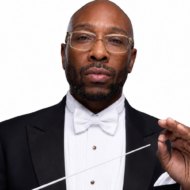
On Phil Andrews, the art of connection, and what happens when a lifetime of relationships becomes a blueprint for something bigger.
By Jarvus Ricardo Hester | Mood Magazine NYC
In New York, everybody knows somebody.
Or at least, that’s what we like to tell ourselves.
We exchange business cards at cocktail parties, make promises over coffee, and say things like, “We should definitely do something together,” with the kind of enthusiasm that suggests a groundbreaking partnership is practically inevitable.
And then Monday comes.
The emails go unanswered. The introductions never happen. The opportunity that seemed so close on Friday disappears somewhere between the subway and the next meeting.
Which got me thinking: What separates the people who know everybody from the people who actually bring everybody together?
It’s a question worth asking about Phil Andrews.
Because when you look at the organizations he has helped lead, the businesses he has built, the relationships he has cultivated and the communities he continues to serve, a curious pattern begins to emerge. His work isn’t confined to one industry, one borough or even one definition of leadership.
He’s moved between entrepreneurship, public service, public relations, mentorship and economic development. He’s worked on Long Island, across New York City and within the broader national conversation about Black business.
And now, he is bringing that experience to the executive leadership team of the East Harlem Tourism Board.
On paper, these may look like separate chapters. But perhaps the more interesting story is what connects them.
What if the common thread isn’t business at all?
What if it’s people?

The Power of Seeing What Someone Else Could Become
Before Phil Andrews became associated with chamber leadership, he was involved in building a business.
His work with the Haircut Hut barbershop franchise, which grew to ten locations during his tenure, placed him inside the everyday realities of entrepreneurship. Long before the language of economic ecosystems became fashionable, there were practical questions to answer: How does a business grow? How does it reach more customers? What makes an enterprise sustainable?
He also worked for the New York City Department of Correction and participated in the founding of the Institute of Inner Development program on Rikers Island.
These experiences belong to different parts of public and professional life. Yet they invite a question about the perspective a person develops when he spends time in different environments, among people with different needs, ambitions and circumstances.
Does he begin to recognize that potential is rarely the problem?
Sometimes what is missing is access. Sometimes it is information. Sometimes it is a relationship with someone who knows how a system works and is willing to explain it.
And sometimes it is simply being taken seriously before the world has caught up with what you know you can become.
That is one way to understand the work Andrews has pursued throughout his career.
Not as a collection of positions, but as a sustained engagement with the space between what people can do and what they have the opportunity to do.

A Chamber Is Really a Conversation
We tend to think of chambers of commerce in very formal terms: membership meetings, certificates, networking events, awards and people standing behind podiums.
But what is a chamber, at its most useful?
It is a place where a business owner who has been working alone might finally meet someone who understands the next stage of the journey.
It is where an entrepreneur can learn what a corporation requires of its vendors, where a small company can discover the importance of certification, and where a relationship formed over a conversation might eventually become a contract.
In 2010, the Long Island African American Chamber of Commerce was established to support businesses and expand economic opportunities across the region. Under Andrews’ leadership, the organization reports growth from approximately 20 members to about 500, alongside service to more than 1,500 businesses through its programs and partnerships.
Those numbers matter. But I find myself wondering about the human stories hiding behind them.
The business owner who finally understood how to pursue a government contract.
The entrepreneur who discovered that a company across town could become a partner rather than a competitor.
The professional who walked into a room not knowing anyone and left with a relationship that changed the direction of a business.
We do not have the individual stories behind every one of those milestones, and we should not pretend otherwise. But they help explain why the work of a chamber can matter far beyond the events on its calendar.
Andrews has spent years developing the relationships between business owners, government agencies, corporate decision-makers and other chambers that make these connections possible.
A 2014 Newsday profile documented his practical emphasis on procurement relationships and business certification. His work has also received recognition from the U.S. Small Business Administration’s New York District Office, which named him a Small Business Champion in 2019.
The larger idea is that a business community becomes stronger when its members are not required to figure everything out alone.
And perhaps the most important thing a connector can offer isn’t a room full of people.
It’s a way into the room that matters.

From Long Island to the Five Boroughs
There is something revealing about Andrews’ decision to help establish the New York City Minority Small Business Chamber of Commerce.
The organization, established in 2023 and publicly launched in 2026, extends his interest in minority-business development into a citywide framework spanning all five boroughs.
New York City is a remarkable place to start a business. It is also a place where proximity can be deceptive.
Two entrepreneurs may operate only a few miles apart and never encounter one another. A business with an excellent product may have little access to the corporate relationships that could help it grow. A neighborhood enterprise may be known to its regular customers but remain invisible to the larger market around it.
The city is full of talent. The question is how that talent finds its connections.
Andrews’ work across Long Island and New York City suggests an interest in building those connections at a larger scale.
The distinction matters. There is a difference between helping one entrepreneur find one opportunity and helping create a network in which opportunities can circulate among many entrepreneurs.
The first can change a business. The second has the potential to change the conditions under which businesses operate.
His involvement with the African American Small Business Foundation and 100 Black Men of Eastern New York further broadens the picture, bringing business development into conversation with education, mentorship and community leadership.
Taken together, these institutions reflect a belief in something more durable than a successful networking event: the value of relationships that can continue producing results after the people who initiated them have left the room.

What Happens When Culture Meets Commerce?
And then comes East Harlem.
If you’ve spent enough time in New York, you know that every neighborhood has two stories.
There is the story told by the people who live there: the restaurants they return to, the businesses they depend on, the institutions that have shaped their lives, the artists who give the streets their character and the histories carried from one generation to another.
And then there is the story told to everyone else.
Sometimes those stories overlap beautifully. Sometimes they barely recognize one another.
The East Harlem Tourism Board is working in the space between them, building a platform intended to connect neighborhood culture, local businesses, destination marketing and wider audiences.
Andrews’ appointment to its executive leadership team introduces a business-development perspective to that work.
At first glance, chamber leadership and tourism might seem like different conversations. One is concerned with businesses and economic relationships; the other with visitors, destinations and cultural experiences.
But consider what happens when the two meet.
A visitor discovers a neighborhood through its food and culture. That visitor finds an independent business, attends an event, purchases a product or returns for another experience. A local entrepreneur gains exposure beyond the customers who already know the business exists.
The story becomes more interesting when those individual encounters are connected through a broader network of partnerships, marketing and measurable engagement.
Tourism, in that sense, is not simply about persuading people to visit a place.
It is about creating meaningful reasons to engage with the people who make that place what it is.
For East Harlem, the opportunity is to ensure that cultural visibility can support the businesses and institutions that sustain the neighborhood itself.
For Andrews, this new role creates a setting in which his experience with business relationships, institutional partnerships and economic opportunity can meet the work of cultural storytelling and destination development.
It is a different stage, but it raises a familiar question: How do you connect people who have something valuable to offer with the people who need to discover it?

The Difference Between Being Connected and Creating Connection
Perhaps this is where the story becomes less about business and more about the nature of leadership.
We often celebrate people for the number of organizations they lead, the boards on which they serve, the awards they receive or the rooms in which they are invited to speak.
Those accomplishments have their place. But they don’t necessarily tell us what a person contributes when the meeting is over.
A title can tell us where someone sits.
It cannot tell us what happens because they are there.
The more revealing question is what a person’s presence makes possible for someone else.
Does an introduction become a partnership? Does an idea become an institution? Does a young professional find a mentor? Does an entrepreneur gain access to a resource that once seemed out of reach?
These are the questions I would want to ask Andrews about his work.
Because his professional history offers an opportunity to look beyond the conventional language of leadership and examine the mechanics of connection itself.
His work with chambers, nonprofit organizations, entrepreneurs and community networks places him at the intersection of people who may share a city, a market or an ambition without necessarily sharing the same access to opportunity.
The work of bringing them together is rarely glamorous. It requires patience, follow-through, trust and a willingness to keep making introductions long after the photograph from the event has been posted.
And it requires understanding that a relationship has value only when there is something meaningful on the other side of it.

A New Chapter, and a Larger Question
As Andrews joins the East Harlem Tourism Board’s executive leadership, there is an opportunity to bring his experience into a different kind of economic conversation.
How can the businesses of a neighborhood become more visible to the people who visit it?
How can cultural institutions and independent entrepreneurs find common ground?
How can a destination’s identity translate into relationships that continue to benefit the community after a visitor has gone home?
And how can those relationships be built in ways that are measurable, sustainable and meaningful to the people who live and work there?
These questions extend beyond tourism. They touch on the broader challenge of building communities in which cultural identity, entrepreneurship and economic development reinforce one another.
The opportunity is not to turn every cultural experience into a transaction. It is to recognize that a thriving cultural neighborhood also depends on the businesses, institutions and relationships that allow its character to endure.
That is where Andrews’ background may prove particularly relevant.
His career has taken him through the world of business ownership, public service, chamber development and mentorship. Each has offered a different perspective on how people find their footing, build relationships and gain access to opportunity.
East Harlem adds another dimension: the possibility of connecting those lessons to a neighborhood’s cultural identity and its relationship with the wider world.
What comes next will depend on the partnerships developed and the work accomplished. But the premise is compelling.
A neighborhood has a story. Its businesses have stories. Its people have ambitions. The challenge is bringing them into a conversation that creates something lasting.

So, What Makes a Connector?
I keep returning to that original question.
In a city where everyone seems to know somebody, what makes a person genuinely good at bringing people together?
Perhaps it is the ability to see a relationship before there is an obvious reason for one.
Perhaps it is understanding that the business owner looking for a customer and the institution looking for a partner may be closer to one another than either realizes.
Or perhaps it is a willingness to believe that the right connection can change the direction of someone’s life, and to do the work required to make that connection happen.
Phil Andrews’ career offers a reason to explore those possibilities.
His record includes the growth of a regional chamber, the development of a citywide minority-business organization, work in entrepreneurship and public service, and continued involvement in initiatives focused on economic opportunity and mentorship.
Now his work enters a new chapter in East Harlem, where culture, commerce and community can meet in a shared effort to connect a neighborhood with the wider world.
The story is still unfolding.
And perhaps that is the most interesting thing about it.
Not the number of titles attached to his name, or even the number of organizations connected to his work, but the question of what becomes possible when the relationships between them begin to take shape.
Because sometimes the person who changes a room isn’t the person standing at the podium.
Sometimes it’s the person who knows who else should be in it.
And sometimes, the most important thing a leader builds isn’t an organization at all.
It’s the connection that allows someone else to build their future.

Question of the Day
Who is the person in your life who always seems to know who you need to know — and what’s the most important introduction they ever made for you?
Stay in the Mood
Sometimes the most valuable person in the room isn’t the one holding the microphone, signing the biggest check, or taking the spotlight. It’s the person who looks across the room and says, “You two should meet.”
That introduction can become a friendship, a partnership, a job, a business deal, a creative collaboration, or even the beginning of an entirely new chapter.
So today, remember the people who make introductions. And if you have the opportunity to open a door for someone, don’t keep the door to yourself. Make the introduction.