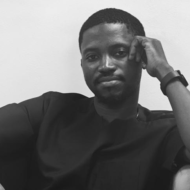

By Minkail Olaitan
On 28 March 2009, the maiden Bola Tinubu Colloquium was held at the Muson Centre in Lagos. Gathered under one roof were statesmen, policymakers, young leaders, innovators, economists and professionals of various pedigrees. They were discussing a critical theme, “Every Vote Must Count,” a theme hich has a jugular importance to Nigeria’s democratic values and requires mindful steering. Interestingly, it was the same month when the 19 political parties were in deep talk to form a unified mega party. Although it didn’t reach a positive end, one of the major reasons was that Bola Tinubu himself had understood, which he voiced out, and focused instead on the Coalition of Democrats for Electoral Reform (CODER). He insisted Nigeria’s system needs electoral overhaul, particularly a system where votes count. Until that happens, coalition, he foresaw, would only mean little. Hence, the theme for his inaugural colloquium, targeting the giant democratic flaw.
The colloquium itself was birthed because Tinubu’s cabinet in Lagos was “an unusual government” where intellectual arguments, debates, and opposing ideas were actively encouraged to solve public problems. Prof. Yemi Osinbajo, one of the keynote speakers at the inaugural Colloquium, remarked on this.

One may also give courtesy to the controversial 2007 election. However, about a decade earlier, as a Governor, around 1999, his close friends and associates of Bola Tinubu moved an idea to turn the heated intellectual policy debates of his cabinet into a national laboratory for progressive governance. “Perfect time,” as a saying goes, “is God’s time, and God’s time is when we make it happen.” The inaugural Bola Tinubu Colloquium marked Asiwaju’s 57th birthday, and it was a decade after the conceptual year. But what never stopped was a man who keeps raising thoughtful and proactive leaders who are now leaders of leaders in their respective arenas.
The 13th edition of the Bola Tinubu Colloquium was last held on 29 March 2022, which ended on a disquieting note as the convener himself stated that he could not celebrate his 70th birthday following the deadly terrorist attack on an Abuja-Kaduna train the night before. Nonetheless, meaningful leadership predicated on structural, economic and social reforms never ceases.

More than 4 years later, on 12 October, the Seyi Tinubu Colloquium held its maiden edition at the Eko Convention Centre. Themed, “Shaping the Future Together.” The pattern detectable from the theme word count, the timeliness and accuracy with which both maidens were assigned. This shared similarity echoes the deliberate character of the platform — to ensure leadership is shared, statecraft is formed by many intentional individuals regardless of background, policies pass through rigorous intellectual scrutiny and interpretation, and most importantly, to understand the state more comprehensively.
Borrowing from Dr. Akinwumi A. Adesina, the President of the African Development Bank (AfDB), the Keynote Speaker of the event, “each Nigerian must lend a hand in encirclement of our dear Baobab tree (Nigeria).” As the village square plays a crucial function as a meeting point in village life, the Seyi Tinubu Colloquium is a rendezvous point for brilliant minds, young and seasoned, to come together to discuss national matters cutting across economy, culture, creativity, entrepreneurship, climate, politics and technology. But the most important function of this gathering is to galvanize the youthful population asset that Nigeria possesses in abundance. Sharing the same energetic clime, Seyi Tinubu projected a future where youths push the frontier of Nigeria to a greater pedestal of economic prosperity, political stability, and social reliability and harmony.

The constantly increasing Nigeria population, particularly the massive basket of energetic youths, have retained scepticism and largely court mixed feelings in recent time, majority of which are from the thoughts that the country would be spread thin in all directions. But, the fundamental concerns, stated by Dr. Akinwumi Adesina, citing from his response to people who have posed questions of concern about the matter, “the population is not liabilities, it becomes a liability when it is left unskilled.” He continued somewhere, with much fervour, “Population is what we inherit, capability is what we build,” pointing out what the Nigerian system is to focus determinedly on. Addressing the same issues, Dr. Toyosi Akerele-Ogunsiji, Founder and CEO of Rise Networks, captures the mood of the room by demanding acculturation of artificial intelligence, innovation, technology, and democratisation of funding support for innovators. She insists the experienced old and clever young must meet at a point and work together to move Nigeria forward. Fascinatingly, Nigeria is at an advantage courtesy of her youth population, especially when the rest of the world is growing old.
The panel session brings together excellent minds from different facets of life, including Titilayo Oshodi, Special Adviser on Climate Change and Circular Economy to the Governor of Lagos State; Bayo Odusanya, Principal Programme Manager, Microsoft; Toyosi Etim-Effiong, Founder and Chief Strategy Officer, That Good Media; Damilola Feyide, Founder, Chief Executive Officer and Proprietress, Let it Shine Academy; Khalil Suleiman Halilu, Executive Vice Chairman/Chief Executive Officer, NASENI; moderated by Mojibade Sosanya, who is also a co-master of ceremonies with Oscar Oyinsan. The session takes the audience through the nook and cranny of the Nigeria economic formational system, fresh perspectives and experiences converging to deal directly with one shared goal — Nigeria’s future.
During the COP28 summit on 1 December 2023, Kenyan President William Ruto publicly applauded Nigeria’s bold economic adjustments, subsidy removal and other appendage reforms. Later, on 22 April 2026, at the African We Build Infrastructure Summit held in Nairobi, he, President Ruto, emphasised that Africa cannot achieve its full economic sovereignty without a thriving Nigeria. In the same voice, Strive Masiyiwa, prominent Zimbabwean industrialist and continental tech expert, in his Forbes address maintained that Nigeria is the undisputed engine room of Africa’s digital economy. While the words and many more may have constructed a relaxing mental nirvana for others, Seyi Tinubu sees it as a call to marshal the vibrant population to push beyond remarks, towards the golden era in real time. He understood, to shape the future we must leverage the tools we have in the present.

His hyper-active participation in the ongoing administration has not gone without backlashes; his identity has constantly fallen under the cudgel of opposition who perceive his participation as undemocratic. Their most logical suggestion is that he dissociates himself from governance, like every other president’s son before him. But he must always be ready and willing to be brought to their political “Bomo” like a lamb and mute away. Meanwhile, the past silence by the president’s children may not mean right, while his participation may not mean wrong, especially when there’s no evidence he’s appointed or elected into any office by the name, “Office of the son of the president.”
Despite a plethora of spiteful rhetoric against him, Seyi Tinubu demonstrated incredible leadership quality by forging ahead and introducing a platform where the public can partake in the national conversation and create a positive camaraderie that shapes our shared understanding of the country — to mould a future where everyone thrives. While addressing the audience, Lagos State Governor Babajide Sanwo-Olu recalls how he was a beneficiary of the President Bola Ahmed Tinubu dynasty, because Mr. President appreciates talent, entertains perspectives as well as debates. This attribute he calls the hallmark of true leadership, while he applauds Seyi Tinubu for embodying the same sense of responsibility and leadership. He enjoins the youths to not only glory in the headcount, but to build capacity. Because numbers alone don’t build prosperity.
Aside from being a gathering made up of a cocktail of insights, it also has the immense layering of traditional prestige led by the Alaafin of Oyo, His Imperial Majesty Oba Abimbola Akeem Owoade I; the Olu of Warri, His Majesty Ogiame Atuwatse III, CFR; His Royal Majesty Oba Saheed Ademola Elegushi (Kusenla III), the Elegushi of Ikate Kingdom and Environs; and others. The Seyi Tinubu Colloquium maiden edition may have ended, but it leaves a lingering realisation: “Nigeria’s ultimate resources are not beneath her soil, they are above the soil — they are her people.”
QUESTION OF THE DAY
If Nigeria’s greatest resource is its people, what must we do differently to turn a growing population into a skilled, innovative and prosperous generation?
STAY IN THE MOOD
Keep learning. Keep building. Keep questioning. Keep contributing.
The future does not arrive fully formed. It is shaped by the people willing to sit at the table, exchange ideas, challenge assumptions and turn conversation into action.
Build capacity. Build community. Build the future. Stay curious. Stay engaged. Stay in the Mood.