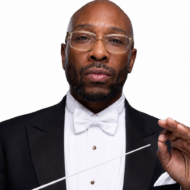
HARLEM, November 28, 2026 — A young singer does not need to arrive with a polished voice, a perfect audition, or years of private lessons. Sometimes the beginning is much simpler: a willingness to listen, the courage to try, and the curiosity to discover what a voice can become.
That is the invitation behind the Harlem Boys Choir, which begins auditions November 30 at Rhythmic Arts Center, 175 East 105th Street, in East Harlem. The program welcomes boys ages 8 to 18 and is preparing to launch its after-school program in January 2027. For families considering a musical home for the new year, the auditions offer an opportunity to take a first step.

A beginning, not a finished product
The language around an audition can make music feel like a closed room: you either have the training, the confidence, and the experience, or you do not. The Harlem Boys Choir is asking families to approach the process differently. Applicants do not need to be perfect singers. Curiosity, commitment, and a willingness to learn matter.
That distinction is important. A youth choir is not simply a place to display ability that has already been developed. It can also be a place where ability is discovered, encouraged, and shaped. A young person may arrive unsure of their range, hesitant about singing in front of others, or unfamiliar with the discipline of ensemble music. The work begins with showing up and being open to instruction.
For a child, that first experience can be meaningful well beyond the notes on a page. Learning to sing with other people requires attention: listening for an entrance, following a musical direction, adjusting to the sound around you, and understanding that every voice contributes to a larger whole. It asks a singer to be both individual and collaborative.

The value of singing together
There is a particular education in making music as an ensemble. A singer learns that confidence is not always volume. Sometimes it is the quiet assurance to hold a line, to breathe with a section, or to begin again after a difficult passage. Rehearsal teaches patience and repetition. Progress comes from returning to the work.
Those habits can travel with a young person into the classroom, onto a stage, and into other parts of life. Musical study can strengthen concentration, memory, listening, and the ability to work toward a shared goal. Just as important, a choir can give young people a regular place to belong to something they help create.
For boys navigating the years between childhood and adulthood, an encouraging artistic environment can make room for expression without requiring them to have everything figured out. The invitation is not to arrive as a finished performer. It is to take part in a process: learn the music, respect the ensemble, develop a practice, and find the confidence that comes with growth.

East Harlem as a place to learn and create
The auditions will take place at Rhythmic Arts Center, 175 East 105th Street, placing the first step in the heart of the neighborhood. A local arts program can become more than an activity on a weekly calendar. It can connect young people and families to a creative community close to home, while giving emerging singers a reason to gather, learn, and build relationships through music.
The Harlem Boys Choir is part of Harlem Collective’s broader cultural and educational work. Its focus is on creating an opportunity for boys ages 8 to 18 to engage seriously with music and the discipline of ensemble performance. The name speaks to a Harlem tradition of artistic excellence, but this is a distinct, current program—not a continuation or rebranding of the historic Boys Choir of Harlem founded by Walter Turnbull.
That distinction matters because every generation must create its own opportunities while understanding the cultural work that came before it. A new choir does not need to claim another institution’s history to recognize the enduring importance of young voices, rigorous musical education, and a community that takes its artists seriously.

A January after-school launch
Alongside the November audition period, the Harlem Boys Choir is preparing an after-school program for January 2027. The timing gives interested families a chance to learn about the choir now and consider how sustained musical participation might fit into the months ahead.
An after-school arts experience offers something different from a one-time workshop. It creates continuity. Students have the chance to return to the same work, build relationships with fellow singers, and see the results of consistent practice. The rhythm of a program—arriving, warming up, rehearsing, receiving guidance, and improving over time—can help young people develop a sense of responsibility for their own progress.
For parents and caregivers, the decision to add an activity to a child’s schedule is a practical one as well as an artistic one. Families will want to learn directly from the program about audition arrangements, participation expectations, scheduling, and enrollment details for January. The choir’s website is the central place to begin that conversation and follow current information.

What to bring to an audition
The most useful preparation may be an open mind. A young singer should be ready to listen carefully, follow directions, and make an honest attempt. There is no need to mistake nervousness for a lack of potential. Auditions can feel unfamiliar, especially for children who have not previously sung in a formal setting. That is precisely why a welcoming first encounter matters.
Parents can help by talking with their sons about what interests them in music, making sure they know where they are going, and encouraging them to approach the experience with curiosity rather than pressure. The goal is not to turn an audition into a test of a child’s worth. It is to find out whether this is a setting in which he wants to learn and grow.
Young people develop at different rates. Some are eager to sing out; others need time to feel comfortable. Some have participated in school music or church choirs; others may be discovering their interest for the first time. A program that values willingness to learn can make space for those different starting points while still taking the work of music seriously.
The invitation is open
Harlem has long understood that culture is not only something a city inherits. It is something its people make, teach, preserve, and pass forward. A choir begins with individual voices, but its sound is built through shared effort. The young singers who enter a rehearsal room this season will bring their own personalities, questions, and possibilities to that collective sound.
For boys ages 8 to 18 who are interested in singing, and for families looking for a meaningful arts experience, the next step is straightforward: learn about the auditions beginning November 30 at Rhythmic Arts Center and explore the January 2027 after-school program.
Auditions: Beginning November 30, 2026
Location: Rhythmic Arts Center, 175 East 105th Street, New York, NY
Ages: Boys 8–18
After-school program: Launching January 2027
Details: HarlemBoysChoir.org
MOOD MAGAZINE NYC — The official culture guide. Stories worth stepping into.
Enjoy this story? Like it, share it, or help Mood amplify its reach.
Help this story travel further.
Choose an amount to support paid promotion of this Mood Magazine feature.
Your payment supports Mood Creative’s paid amplification campaign, not a tax-deductible donation to the featured person or organization. Mood reviews campaign placements before spending. Eligible paid amplification revenue carries a 10% commission for the feature’s writer.