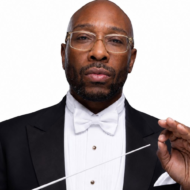
In a city that never stops talking, perhaps the most luxurious thing you can do is listen. From the concert hall to your living room, WHRL Mood Radio is making the case for classical music as the soundtrack to a calmer, more intentional New York.
New York has a way of making everything feel urgent.
The emails are multiplying. The subway is crowded. Somebody is talking loudly on the phone. Your calendar looks like a game of Tetris, your coffee is getting cold, and somehow you have managed to experience an entire day’s worth of stress before lunchtime.
And it’s only Tuesday.
Living in New York means developing a certain tolerance for chaos. We learn to walk quickly, think quickly, answer quickly and occasionally eat dinner while answering emails. We have perfected the art of doing six things at once, while quietly wondering why our minds never seem to get a moment to themselves.
But here’s a thought: What if the answer to all that noise was a little Mozart? Or perhaps a little Florence Price?
Because while New Yorkers have become experts at finding the next great restaurant, the next exclusive opening and the next place to be seen, perhaps it’s time we discovered something equally fashionable: the art of slowing down.
And classical music might just be the most elegant place to start.
The Case for a Classical Comeback
Let’s be honest. When was the last time you deliberately sat down and listened to a classical composition?
Not music playing somewhere in the background while you answered emails. Not a soundtrack in a movie. Actually listened.
There is something wonderfully different about giving your attention to a piano sonata, a string quartet or a sweeping orchestral movement. There is no demand to respond. No notification asking for your attention. No algorithm insisting you watch one more video.
Just music.
And that may be precisely what makes the experience so appealing in a world that rarely gives us permission to do nothing.
Research has explored how music can influence mood, stress and physiological responses. Calming music may help some listeners relax, ease tension and create the conditions for slower breathing and a quieter state of mind. It isn’t a medical treatment or a magic switch, and every listener responds differently. But it can be a meaningful part of a personal wellness routine.
Think of it as giving your mind somewhere beautiful to go.

Your Nervous System Called. It Wants a Piano Concerto.
We’ve become very familiar with the language of wellness. Meditation. Mindfulness. Breathwork. Digital detoxes. Boundaries.
All important, certainly. But what if your next wellness ritual didn’t require an expensive membership, an elaborate morning routine or an appointment you have to schedule three weeks in advance?
What if it simply required pressing play?
Imagine coming home after a particularly New York day. You put your phone down, pour yourself something to drink, turn on a beautiful classical recording and allow the music to fill the room.
No frantic playlist changes. No breaking-news alerts. No pressure to be productive.
Just a little space between you and the demands of the world.
For some listeners, slower compositions can create a calming atmosphere that makes it easier to unwind. Others may find that gentle instrumental music helps them concentrate, read, write or simply enjoy their own company.
The point isn’t to force yourself to feel peaceful. It’s to create an opportunity for peace to find you.
And frankly, in this city, that sounds like a luxury worth having.

The New York Wellness Accessory
We’ve seen the city embrace everything from boutique fitness to elaborate skincare rituals. We know where to find the best matcha, the most coveted Pilates class and the newest wellness destination.
But perhaps we’ve overlooked one of the most accessible cultural experiences available to us.
Classical music.
There is something undeniably chic about making a deliberate soundtrack for your life. A little Debussy while getting dressed. Bach while enjoying your morning coffee. A piano composition while reading on a Sunday afternoon. Florence Price while preparing for the week ahead.
Suddenly, the ordinary becomes an occasion.
And unlike so many of the things New York tells us we need to buy in order to feel better, this ritual can begin with nothing more than a willingness to listen.
Harlem Has a Classical Music Story, Too
There is another reason this conversation feels especially meaningful in Harlem.
This neighborhood has always understood the power of music to shape culture, identity and imagination. From the Harlem Renaissance to the jazz traditions that changed American music, Harlem has helped the world discover new ways of hearing itself.
But the classical tradition is part of that story, too.
Consider Florence Price, whose compositions helped redefine the possibilities for Black women in American classical music. Consider Margaret Bonds, whose extraordinary musical legacy deserves to be heard far beyond the concert hall. Consider William Grant Still, whose work helped open doors in American orchestral music.
Their compositions aren’t historical footnotes. They are music to be experienced, enjoyed and rediscovered.
And perhaps the next generation of listeners will encounter these composers not through a textbook, but through a radio broadcast, a beautiful recording or a quiet moment at home.

Enter WHRL Mood Radio
This is where WHRL Mood Radio enters the picture.
As part of the Mood media family, WHRL offers listeners another way to experience culture: through sound. It’s an invitation to make music part of the everyday rhythm of life, whether you’re beginning your morning, settling into a creative project or looking for a softer landing at the end of a long day.
The opportunity is bigger than simply introducing people to classical compositions. It’s about making room for a different relationship with music.
One where listening isn’t just something you do while you’re doing something else.
One where the music itself is the experience.
And you don’t have to leave this page to begin. You can listen to WHRL Mood Radio right here on the Mood Magazine website: simply head to the Listening tab at the bottom of the site and press play.
Darling, Change the Soundtrack.
New York isn’t going to slow down. The subway will still be late. The inbox will still be full. Somebody will inevitably be having a very loud conversation three inches from your ear.
But you can choose what happens when you get home. You can choose what accompanies your morning. You can give yourself ten minutes without the constant noise of the outside world.
Put on a little piano. Discover a composer you’ve never heard before. Let an orchestra take you somewhere beyond your to-do list.
Because perhaps the next great New York wellness trend isn’t something you wear, book or buy.
Perhaps it’s something you hear.
WHRL Mood Radio. Get control of your mood.
Question of the Day
When the world gets too loud, what kind of music helps you find your peace? Is it a piano sonata, a sweeping orchestral score, a favorite composer—or something entirely different? Tell us in the comments. We want to know what’s on your soundtrack.
Stay in the Mood. Discover more culture, stories and sounds with Mood Magazine NYC. And remember: WHRL Mood Radio is waiting for you at the Listening tab at the bottom of our website. Press play, take a breath and enjoy the music.
Enjoy this story? Like it, share it, or help Mood amplify its reach.
Help this story travel further.
Choose an amount to support paid promotion of this Mood Magazine feature.
Your payment supports Mood Creative’s paid amplification campaign, not a tax-deductible donation to the featured person or organization. Mood reviews campaign placements before spending. Eligible paid amplification revenue carries a 10% commission for the feature’s writer.