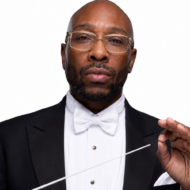

NEW YORK — Imagine walking into Carnegie Hall, the air thick with expectation, the hum of anticipation vibrating through the wooden floors and crystal chandeliers. Nearly a century ago, a young composer named William Levi Dawson dared to do the unthinkable: he brought the sounds of African American spirituals, the heartbeat of his people, into a hallowed hall reserved for classical European tradition. The result was the Negro Folk Symphony, a work that told the story of struggle, resilience, and triumph with a voice that was unapologetically Black.
For decades, Dawson’s masterpiece drifted into obscurity. Its melodies were powerful, yes, but history’s currents—segregation, discrimination, and neglect of Black composers—meant the music went unheard, its genius largely forgotten. Last April, however, the Gateways Festival Orchestra resurrected the symphony on Carnegie Hall’s main stage. Ninety-six musicians of color poured life into every note, every harmony, every crescendo, reminding audiences that this music was not just to be heard—it was to be felt.

Damien Sneed, a professor at Howard University and Juilliard, was among those on stage. “It was incredible,” he recalls. “To witness this collective energy, this reclaiming of a sound that belongs to our history—it was breathtaking. Each musician became a storyteller, each note a voice for those who came before us.”
The symphony’s power lies in its authenticity. Dawson wove African American spirituals into a classical form, creating a narrative that mirrored the Black experience in America: the struggle against oppression, the celebration of community, and the indomitable human spirit. From the swelling strings to the rhythmic percussion, every moment evokes a story of survival and hope.
This February, as we celebrate Black History Month, the Metropolitan Opera Orchestra will honor Dawson’s legacy once again at Carnegie Hall. The performance is more than music; it is a ritual of remembrance, an affirmation that art can reclaim space, rewrite history, and amplify voices that have long been marginalized.
For audiences, the Negro Folk Symphony offers a portal—a way to experience history not as a distant abstraction but as a living, breathing force. The music invites reflection, sparks conversation, and encourages a deeper understanding of the cultural foundations upon which American music has been built.
Dawson’s symphony reminds us that art is resilience, that melody can be revolution, and that the past informs the future in every note played, every rhythm felt, and every harmony embraced. Carnegie Hall is not just a venue; it is a space where memory and music converge, where the spirit of a nearly forgotten symphony can soar again, and where the legacy of William Levi Dawson reminds us that Black artistry is timeless, unyielding, and profoundly transformative.
This story expands in a long-form feature explore Mood Magazine online.
Subscribers get full access. Start your 7-day free trial.
Listen to the extended audio feature with cultural context, music analysis, and discussion of the series’ lasting impact. Streaming now on the Mood Radio front page.
Follow the Voices in The Poets
The Poets is our upcoming show centering writers, spoken word artists, and storytellers shaping culture in real time. Discover new voices, submit your work, and follow the launch.
Mood is reader- and listener-supported. Subscribe to sustain the work. Volunteer to help build what’s next. Share stories that matter. However you join, you belong here.