
Minkail Olaitan– Managing Editor Nigeria
The first thing the room understands is not the lyrics. It is the body. A thousand people who do not speak Yoruba are already moving as if the language had been waiting in their joints. That is Asake’s real trick. He does not translate Lagos for export. He makes the export come to Lagos, then watches itself dance.
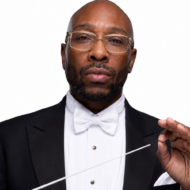
Ahmed Ololade, the boy from Isale Eko, has spent four years turning that trick into a global habit. Clubs from Peckham to Paris now shout hooks they cannot parse on paper. Tourists leave concerts humming Ololade mi Asake as if the oríkì were a password they had always owned. When Red Bull finally gave Afrobeats a symphony in America, it was this voice they put at the centre: first African artist to headline Red Bull Symphonic in the United States, 8 November 2025, Kings Theatre, Brooklyn. A 33-piece orchestra. An eight-member choir. Conductor Glenn Alexander II. Wizkid in the wings. Central Cee, Gunna, Tiakola, Fridayy. Parallel films of New York and Lagos grinding at the same tempo before a single note. The night was not a crossover. It was a coronation that refused to leave home behind.

He can sing in English. He has said so plainly. He chooses not to make that the centre of the work. In an interview with Essence, he put the matter without decoration: “It’s not like I can’t communicate in English with people. I think I can actually talk to the whole world in English or probably sing to the whole world in English for everyone to understand it. But because my music is based on my own story and my own journey and the stuff that shapes me, I think I’m more comfortable to say it in Yoruba because it has the depth of how I want it to be said.”
The world, against every old A&R instinct, accepted the terms. Reno Omokri, writing after Lungu Boy, named the phenomenon with unusual precision. Listening to a song like “Fuji Vibe,” he said, makes you want to move as if you already understand. “If you cannot translate it through words, you will nevertheless translate it via dance.” Rolling Stone heard the same thing on that album: Asake’s sense of melody, pacing, and attitude “transcends language,” and the record is often at its best when he does not bother translating himself. The Guardian, reviewing Work of Art, called the sudden leap from Yoruba into English slang “a bullish refusal… to water down his music for western audiences.”

This is not novelty. It is a relay. Fela took Yoruba thought and jazz muscle into a political church. King Sunny Adé carried jùjú across oceans until talking drums sat inside global pop. Wizkid made the contemporary Afrobeats cadence feel inevitable in rooms that once required translation. Asake inherits that race and changes the pace. He does not sand the street down. He builds the street on the stage.
Watch the architecture of his shows and the point becomes physical. At Madison Square Garden in 2024, Rolling Stone described a set dressed like a Lagos corner that had been airlifted intact: stacks of tyres, shipping drums, old television sets looping his face, graffiti, rusted tin sheets of the kind used to raise houses in West African slums, street signs pointing toward landmarks such as Adeniji Adele. Dancers in denim and Timberlands. Skaters and trick bikes during “Skating.” A smoke cannon during “Basquiat.” The corner is the corner, the review said, from Lagos to New York. The theatrical training is not a rumour. He studied Dramatic Arts at Obafemi Awolowo University. He trained as an actor before the world decided he was a singer. GQ later caught the live consequence: a full band, a body thrown into crowds, a guitar smashed when the spirit required it. The stage is not decoration. It is dramaturgy. Lagos is the set. The concert is the play.
Red Bull Symphonic made that play cinematic. Fuji cadences sat under strings. Amapiano log drums spoke to a choir. “MMS,” performed with Wizkid, became a meeting of two Nigerian generations inside a room designed for European repertoire. “Worship” opened like prayer and closed like weather. Asake had said beforehand that he was staying calm and in his creative spirit, that you cannot rush good things. The patience showed. The rebellion showed too. He did not ask the orchestra to civilise Afrobeats. He asked Afrobeats to occupy the orchestra.
Critics have argued over whether the sound has repeated itself. Joshua Minsoo Kim at Pitchfork treated the fuji-amapiano-choral blend as the product of real invention. Others, after Work of Art and Lungu Boy, heard recycling. The quarrel is almost beside the larger fact. Kelefa Sanneh, in The New Yorker, named him “the Nigerian voice of a South African style,” which is another way of saying he made a border into a dialect. Producer Magicsticks helped lock the template. Olamide, who signed him to YBNL, had already spent a decade proving that local language could own the charts. Asake took that permission and made it fashion, faith, and export.

Youth culture followed the permission. A generation of younger street-pop artists now treats originality as a method rather than a mood. TurnTable Charts later placed Asake at the head of a four-year run in which the “No. 1 New Artiste” prize kept going to voices that refused the old entry requirements. The comparison that keeps returning is Bad Bunny: the world will learn the language, or it will miss the party. In late 2025 and 2026, Asake pushed the point further. The NATIVE noted that Yoruba had left the records and entered the interview chair. On Spotify’s Frequency series and in a homecoming film with Korty EO, he spoke with little concession to the imagined foreign listener. Subtitles could work for once. When he returned to Lagos, Eyo dancers met him. The Ooni of Ife commended him for carrying the culture abroad. At Flytime Fest, King Saheed Osupa walked onstage and the lineage became visible in one frame: fuji elder and fuji child, same city, same drum.
What he has given global youth is not a costume of Africa. It is a proof. You may keep the depth of the language that raised you and still sell out the rooms that once demanded you shrink. You may build a stage that looks like your street and watch Madison Square Garden recognise itself in the tin and the tyres. You may take a form born to keep worshippers awake before dawn and set it under a Brooklyn chandelier.
Fela opened the argument. Sunny Adé carried the melody across water. Wizkid made the contemporary world listen without flinching. Asake has done something ruder and more intimate. He has made millions of strangers feel, for three minutes at a time, that Yoruba was a tongue they had been waiting to remember. The unification was sudden only to people who had not been listening to Lagos. For everyone else, it was the sound of a street finally arriving at the centre of the map and declining to take off its shoes.

THE MOOD QUESTION
What part of yourself have you been translating for people who were perfectly capable of learning your language?
Asake’s rise asks something bigger than whether the world understands Yoruba.
What happens when we stop shrinking the things that make us distinct just to make ourselves easier to consume?
Maybe the world doesn’t always need a translation.
Maybe sometimes the world needs to listen.
STAY IN THE MOOD
The story doesn’t end here.
Turn the page, discover another voice, and keep exploring the people, places, music, food, ideas and culture connecting Harlem to the world.
And while you’re reading, turn on WHRL Mood Radio Harlem—the soundtrack to the Mood experience, broadcasting music, culture and conversation from Harlem to our growing community around the world.
Read Mood. Listen to WHRL. Watch Mood TV. Live the culture.
Let us curate your Mood.
Mood Magazine. Mind. Body. Spirit. Culture. Harlem to the world.