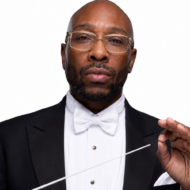

There are voices that impress — and then there are voices that command space.
Russell Thomas belongs to the latter.
Inside the opera house, when Thomas steps into a role, something changes in the room. The air tightens. Attention sharpens. Not because of spectacle, but because of presence. His voice carries weight — technically precise, emotionally grounded, and unmistakably human.
A leading dramatic tenor, Russell Thomas has performed on the world’s most prestigious stages, from the Metropolitan Opera to international houses across Europe and beyond. His repertoire spans Verdi, Puccini, and contemporary works, demanding not only vocal power but psychological depth. And Thomas delivers both.

But what makes his career particularly significant is not only where he sings — it’s how he sings.
Thomas approaches opera as storytelling first. His performances are rooted in intention, character, and emotional truth. Each role feels inhabited rather than performed, shaped by a deep respect for the music and the humanity within it. This approach has made him one of the most respected tenors of his generation.
Inside an industry that has historically marginalized African American artists, Russell Thomas’s presence is also symbolic. He stands as proof that Black excellence in opera is not an exception — it is foundational. His success challenges outdated narratives about who belongs in classical music spaces and expands what audiences imagine when they think of operatic leading men.

Beyond the stage, Thomas has been a visible advocate for inclusion and representation in the arts. He speaks openly about the importance of access, mentorship, and opportunity for young singers of color. His career reflects not only personal achievement, but responsibility — a recognition that visibility creates pathways.
Inside the opera house, audiences don’t just hear Russell Thomas.
They witness authority.
They experience vulnerability.
They feel history moving forward.
In an art form built on legacy, his voice reminds us that tradition is not static — it evolves with those bold enough to claim it.
Russell Thomas doesn’t just sing opera.
He reclaims space within it.
And when the curtain rises, the story sounds different because he is there.
by Jarvus RIcardo Hester