Some works of art do more than enter the cultural conversation. They change the terms of it. When Philip Glass and Robert Wilson introduced Einstein on the Beach at the Festival d’Avignon in 1976, they offered audiences an opera that seemed to dissolve the familiar boundaries between music, theater, movement and time. Fifty years later, the work’s afterimage is everywhere: in contemporary opera, experimental theater, electronic music and the way artists think about duration and repetition.
From November 19 through 21, the work returns to Brooklyn Academy of Music for a 50th Anniversary Concert presented by the Philip Glass Ensemble. The three performances begin at 7:30 p.m. in BAM’s Howard Gilman Opera House. The anniversary presentation also includes a special artistic installation by Tony and Olivier Award-winning artist and designer Es Devlin, inspired by Glass’s early writings about his music.

A work that changed the clock
Einstein on the Beach is often described as a four-and-a-half-hour opera, but the BAM anniversary event is a concert presentation with a listed running time of two hours and 35 minutes, including intermission. That distinction matters. This is not being advertised as a full restaging of the original production. Instead, the music returns in a concentrated concert format, performed by the ensemble that has carried Glass’s musical language across generations.
The opera’s original structure challenged the expectations audiences brought to the theater. Rather than moving through a conventional plot, it unfolds through recurring musical patterns, number sequences, spoken phrases and visual tableaux. The effect is cumulative. The listener is invited to experience time differently, to hear small changes gather weight and to notice how repetition can become a form of transformation.

The musicians who know the score
The Philip Glass Ensemble is led by longtime music director Michael Riesman. The BAM presentation also features an actor, a chorus and violinist Aliayta Foon-Dancoes. The listed chorus includes Philip Anderson, Joe Chappel, Tomás Cruz, Katie Geissinger, Oriana Hawley, Britt Hewitt, John Kawa, Kate Maroney, Gregory Purnhagen, Peter Stewart, Azalea Twining and Piper Weldon. BAM’s season announcement also identifies Lucinda Childs as part of the anniversary event.
That continuity is central to the evening. Einstein is not simply a score that can be approached as a historical artifact. Its rhythmic architecture and vocal writing require a particular discipline, and the ensemble’s long relationship with Glass’s music gives the concert a living connection to the work’s original artistic world.

Es Devlin enters the conversation
The special installation by Es Devlin gives the anniversary a visual dimension without turning it into a conventional revival. Devlin’s practice moves across theater, opera, music and large-scale public art; her stage and installation designs often create environments in which architecture, light, text and performance become part of one experience. At BAM, her work is described as an artistic installation inspired by Glass’s early writings about the music.
It is an apt partnership. Wilson’s original visual language and Glass’s score were inseparable from the opera’s impact. A new installation by Devlin offers a contemporary response to that history, rather than attempting to reproduce a production that has already become part of performance lore.

Brooklyn and the history of the work
BAM’s relationship with Einstein on the Beach is not incidental. Glass and Wilson first met through BAM in 1973, and the opera was staged at the institution in 1984, then revived in 1992 and 2012. The anniversary concert therefore brings the work back to a venue that has helped shape its New York history.
That history is also a reminder of BAM’s particular role in the city’s performing arts life. The institution has long made space for artists whose work sits between disciplines, and for ambitious projects that ask audiences to reconsider what a performance can be. The Next Wave program continues that tradition, placing established artistic legacies alongside new work in dance, theater, music, film and performance.

Why this anniversary still feels present
Fifty years can turn a radical work into a monument. The challenge for an anniversary is to make it audible again—not simply to celebrate the fact that it once mattered. The concert format, the presence of the Philip Glass Ensemble and Devlin’s new visual contribution all offer ways to encounter the work as something active, rather than as a museum piece.
For listeners who know the opera, the evening offers a chance to hear its musical architecture in a new frame. For those meeting it for the first time, it is an opportunity to experience one of the defining American works of the late twentieth century in the very city where its creators first crossed paths. No special preparation is required. An openness to repetition, duration and the unexpected is enough.
Listening for the architecture
Part of the fascination of Glass’s music is that its patterns are both exact and open. Repeated figures create a framework, but the listener’s attention is free to move within it. A phrase that seemed static begins to reveal tiny shifts in emphasis; a pulse that felt mechanical can become surprisingly human. The music does not hurry to explain itself. It asks the audience to stay with it long enough for the experience to change.
That quality has helped Einstein on the Beach travel well beyond the opera house. Its influence can be heard in minimalist composition, contemporary dance, film scoring and experimental performance. The anniversary is therefore not only about a celebrated premiere. It is about a work whose ideas continue to circulate, inviting new artists and audiences to rethink the relationship between sound, image and time.
For New York, the return carries a special sense of place. The city has long been a laboratory for artists who cross disciplines, and BAM has provided a stage for that ambition. The three-night engagement offers a rare chance to hear this music in a setting connected to the history of its creators—and to experience a landmark work as a living performance rather than a name in a chronology.
Plan your visit
Einstein on the Beach—50th Anniversary Concert runs November 19–21, 2026, with performances at 7:30 p.m. at the Howard Gilman Opera House, BAM Peter Jay Sharp Building, 30 Lafayette Avenue, Brooklyn, NY 11217. Tickets start at $65; the listed running time is 2 hours 35 minutes, including intermission. Details and tickets: BAM.
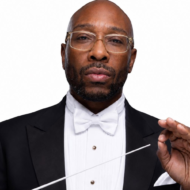
Photography note: Supporting photographs are illustrative music and performance imagery, not documentation of the anniversary concert or its artists.
Mood Magazine NYC — official culture guide, stories worth stepping into.