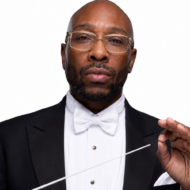

As Mood builds a newsroom in Nigeria, I am discovering that reconnecting with the Motherland is less about looking backward than learning how to know one another now.
By Jarvus Ricardo Hester
I have always known that I am African.
At least intellectually.
As a Black man born in America, Africa has always existed somewhere in the story of who I am.
It was in the history books.
It was in the music.
It was in the food.
It was in the faces of people who looked like members of my own family even though an ocean and generations of history stood between us.
Africa was the Motherland.
We said it.
We believed it.
We wore it.
But I’m beginning to realize something.
Knowing that Africa is part of your history is very different from actually knowing Africa.
And lately, Africa has stopped feeling like an idea to me.
It has started becoming personal.

When Nigeria Entered the Room
As Mood Media Network has begun building our presence in Nigeria, something unexpected has happened to me.
I’m learning.
Not in the ceremonial way we sometimes talk about reconnecting with Africa.
I’m talking about ordinary discovery.
Names I didn’t know.
Writers I hadn’t read.
Artists I hadn’t heard.
Conversations happening in Lagos that I knew nothing about in Harlem.
Ideas about business.
Family.
Faith.
Style.
Food.
Money.
Love.
Ambition.
Culture.
And occasionally I find myself thinking:
How did I not know this?
Yesterday was a perfect example.
Through our Nigerian Managing Editor, Minkail Olaitan, our national story led me into the music of Angélique Kidjo.
I had never really encountered her music before.
And then I listened.
Man.
Her music is fire.
[Laugh.]
But what excited me wasn’t simply finding another artist I liked.
It was the feeling of discovery.
Here was this enormous African voice, this extraordinary body of work, this cultural force—and there was still an entire world available for me to encounter.
That made me think about how much of the Motherland many of us in Black America may still have left to discover.

We Inherited a Distance
The distance between Black America and Africa did not happen naturally.
History created it.
People were taken.
Names were lost.
Languages were interrupted.
Families were separated from geography.
Generations were born who knew they came from somewhere but could not necessarily point to the village, the people or the language that had once made “somewhere” specific.
Then America taught us about Africa.
And too often, what did we see?
Poverty.
War.
Famine.
Colonization.
Wildlife.
Need.
Africa became something discussed through crisis.
But that is not a continent.
That is an edit.
Nigeria alone contains worlds.
Lagos does not tell the entire story of Nigeria any more than Harlem tells the entire story of America.
And Africa certainly cannot be understood as one culture, one sound, one history or one experience.
That seems obvious when you say it.
But how often have we actually behaved as though we understand that?

I Don’t Want Mood to “Cover Africa”
That’s something I’ve been thinking about as we grow.
I don’t want Mood Magazine to occasionally publish an “Africa story.”
I don’t want our Nigerian office to exist so somebody in New York can call when we need an African perspective.
That’s still looking across the ocean.
I want Nigeria inside the house.
I want the writer in Lagos to tell Harlem what we’re missing.
I want Harlem to tell Lagos what’s happening here.
I want someone in Atlanta to discover a Nigerian novelist.
I want someone in Nigeria to discover an artist working in Chicago.
I want Savannah and Accra in conversation.
I want our food coverage to make somebody curious enough to taste something they’ve never eaten.
I want our literary coverage to introduce writers whose names weren’t on the syllabus.
I want our radio audience to hear music they didn’t know they loved.
And I want us to be humble enough to discover each other without pretending we already know everything.
Because connection cannot be built entirely on ancestry.
It has to be built on relationship.

The Motherland Is Alive Right Now
Sometimes our language around Africa becomes so historical that we accidentally turn the continent into an ancestor.
Something sacred.
Something important.
Something behind us.
But Africa isn’t waiting inside a history book for Black Americans to rediscover it.
People woke up in Lagos this morning.
They complained about traffic.
Somebody fell in love.
Somebody got fired.
Somebody started a company.
Somebody’s mother called and asked a question that was none of her business.
[Laugh.]
Somebody wrote a song.
Somebody opened a restaurant.
Somebody is worried about money.
Somebody is wearing something incredible.
Somebody is sitting in an office wondering why this meeting could not have been an email.
That’s life.
And perhaps that is one of the most meaningful ways Black Americans can reconnect with Africa:
not simply by revering it,
but by knowing it.
As it is.
Right now.
Complicated.
Modern.
Young.
Ancient.
Ambitious.
Frustrating.
Beautiful.
Changing.
Alive.
Harlem Has Something to Learn Too
Harlem understands what it means to be reduced to an image.
People around the world know the Harlem Renaissance.
They know jazz.
They know the Apollo.
They know certain photographs.
Certain names.
Certain moments.
But Harlem is not a museum.
People live here.
Businesses struggle here.
Families build here.
Artists create here.
People argue about rent here.
People fall in love here.
The neighborhood is simultaneously history and Tuesday morning.
Maybe that’s why this connection feels so natural to me.
Harlem and Africa both deserve to be experienced beyond the mythology.
The history matters.
But so does now.
I Am Not Going to Pretend I Know
And maybe that’s the most important thing I can say at the beginning of this new chapter.
I don’t know enough.
There are Nigerian artists I haven’t heard.
Writers I haven’t read.
Foods I haven’t tasted.
Cities I haven’t experienced.
Traditions I don’t understand.
Languages I cannot speak.
Histories I still need to learn.
And I’m not embarrassed by that.
I’m excited by it.
Because discovery requires admitting there is something left to discover.
I don’t want to stand in Harlem and tell Nigeria who Nigeria is.
I want Nigeria to tell me.
And then I want to open the microphone.

From Harlem to the World Means Something Different Now
We’ve said that phrase for a long time:
Harlem to the world.
I’m beginning to understand that the arrow cannot only point outward.
If Mood is really going to become what I believe it can become, the world has to come back through that door too.
Nigeria to Harlem.
Lagos to New York.
Africa to Black America.
Black America to Africa.
Not as tourists staring at one another.
Not as distant cousins romanticizing a relationship we haven’t actually built.
But as people talking.
Sharing.
Listening.
Disagreeing.
Laughing.
Learning.
Introducing each other to things we somehow missed.
Yesterday, for me, it was music.
Tomorrow it may be a writer.
Next week, a dish.
Eventually, perhaps, a place.
And somewhere in all those small discoveries, the word Motherland begins to mean something more than where our story started.
It becomes part of the story we are writing now.
I have spent my life knowing that Africa was part of me.
Now I want to know Africa.
And maybe that’s the invitation for all of us.

The Mood Question
Black America talks often about reconnecting with Africa—but how much do we actually know about African life, culture and people as they exist today?

Stay in the Mood
This week, discover one thing from the African continent that you did not know yesterday.
One artist.
One writer.
One city.
One filmmaker.
One dish.
One designer.
One piece of history.
But don’t stop at saying, “This is African.”
Find out where it comes from.
Who created it.
What community shaped it.
What language surrounds it.
What story it carries.
Africa is not one thing.
And perhaps reconnecting with the Motherland begins with giving ourselves permission to discover just how much there is to know.
Through our growing Nigerian newsroom and the voices joining Mood from across the continent, we’re going to keep opening that door.
Not so Harlem can explain Africa.
So we can hear each other.
Harlem to the world. And the world back home.
Mood Magazine. Mind. Body. Spirit. Culture. Harlem to the world