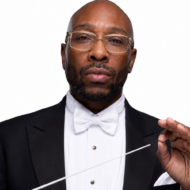
Rob Morgan Doesn’t Need to Steal the Scene. Somehow, He Owns It Anyway.

In an industry that often mistakes volume for power, Rob Morgan has built a career reminding us that sometimes the person doing the least is the one you cannot stop watching.
There is always that actor.
You know the one.
You finish the movie, the credits begin to roll, and while everyone else is talking about the star, you’re reaching for your phone.
“Wait. Who was that?”
Not the person with their face across the billboard.
Not necessarily the character with the longest monologue.
The other one.
The actor who appeared for twelve minutes, said six words, looked across a room once—and somehow left you thinking about him on the train home.
Rob Morgan is that kind of actor.
And his latest work in The Rivals of Amziah King gives us another reason to talk about a particular kind of performer Hollywood has always needed but hasn’t always known how to celebrate: the character actor.
Morgan’s presence in the film is the peg for today’s conversation, but the more interesting story may be what his career tells us about the difference between being seen and being memorable.
Because in a culture increasingly obsessed with becoming the main character, I find myself wondering:
When did we decide every great performance had to happen in the center of the frame?

The Actor You Already Know
Even if the name Rob Morgan doesn’t immediately produce a face in your mind, there’s a good chance you’ve seen him.
That’s one of the strange realities of being a great character actor.
Audiences know the work before they know the name.
Morgan has built his career playing men who often seem to arrive carrying lives that began long before the camera found them.
You see it in the posture.
The pauses.
The way he occupies silence.
There are performers who communicate:
Watch me act.
Morgan often seems to communicate something much more dangerous:
I’m not acting for you at all.
And suddenly you’re leaning forward.
Silence Is an Expensive Special Effect
Movies have become very good at getting our attention.
Explosions.
Franchises.
Computer-generated worlds.
Music telling us precisely when we’re supposed to cry.
Editing designed for an audience presumed to be one notification away from checking its phone.
And then an actor like Rob Morgan appears and does something almost radical.
He gets quiet.
The research behind today’s Noir Film desk highlighted Morgan’s use of silence, micro-expressions and physical posture as central to his screen presence.
And isn’t silence interesting?
In everyday life, most of us are terrified of it.
A conversation goes quiet and someone immediately reaches for another question.
A dinner gets quiet and somebody checks a phone.
A relationship gets quiet and suddenly we’re wondering if something is wrong.
We fill silence because silence leaves room for uncertainty.
Great actors understand that uncertainty is precisely where an audience begins doing some of the work.
Morgan doesn’t always tell us what a character is thinking.
He lets us wonder.
And wondering keeps us watching.

Hollywood Loves a Leading Man. Life Doesn’t Work That Way.
We have inherited an interesting mythology from movies.
There is a protagonist.
There are supporting characters.
There are extras.
Someone’s story matters most.
Everyone else exists somewhere around it.
But real life isn’t structured like a screenplay.
The waiter has a story.
The woman sitting three seats away on the subway has a story.
The doorman has a story.
The person who cleans the office after everyone leaves has a story.
The man standing silently behind the hero has a story.
And some of the most interesting Black actors have built careers making sure we can feel that story even when the script doesn’t give us all of it.
That’s the magic of a great character actor.
They make you suspect there is another movie happening just beyond the edge of the one you’re watching

There Is Something Particularly Black About Being Essential and Overlooked
It’s difficult to talk about the character actor without eventually talking about recognition.
Because Black performers have spent generations doing extraordinary work in roles the industry didn’t always consider extraordinary.
The friend.
The neighbor.
The father.
The worker.
The prisoner.
The preacher.
The soldier.
The person who arrives long enough to move somebody else’s story forward.
Sometimes those roles were stereotypes.
Sometimes brilliant performers turned them into something much more.
That’s why there is value in looking closely at an actor like Morgan.
Not because every role must become a grand statement about representation.
But because craft deserves to be noticed even when celebrity doesn’t announce it.
And perhaps that’s true outside Hollywood too.

What If You’re Not Supposed to Be the Main Character?
Social media has given us an entire vocabulary around becoming the “main character.”
Curate your life.
Build your brand.
Tell your story.
Take center stage.
There is something liberating about that, particularly for people who have historically been pushed toward the margins.
But I wonder whether we’ve taken the metaphor too literally.
Because not every season of life requires center stage.
Sometimes you’re building.
Sometimes you’re observing.
Sometimes you’re supporting somebody you love.
Sometimes you’re doing excellent work while somebody else’s name is on the door.
Sometimes you’re the person without whom the entire thing would collapse—and almost nobody knows it.
Does that make the work less valuable?
A character actor understands something our attention economy has forgotten:
Importance and visibility are not the same thing.

The Luxury of Not Performing Importance
There is something else about Morgan’s screen presence that feels increasingly rare.
He doesn’t seem desperate to convince you that the moment matters.
And perhaps that’s why it does.
We live in an era of announcements.
Every accomplishment becomes a post.
Every meal becomes content.
Every vacation becomes evidence.
Every relationship becomes a public narrative.
Sometimes even happiness feels as though it hasn’t quite happened until somebody else has witnessed it.
Cinema gives us the same temptation.
Make the performance bigger so nobody misses it.
But restraint has its own confidence.
A whisper can make people lean closer.
A pause can become more powerful than a paragraph.
A face doing almost nothing can reveal almost everything.
Maybe real confidence isn’t always the ability to command attention.
Maybe sometimes it’s knowing you don’t have to ask for it.

And Then the Credits Roll
The great irony of character acting is that the audience may remember the character longer than the actor’s name.
Perhaps that’s unfair.
But perhaps there is also something beautiful about it.
The performer disappears.
The person they created remains.
You leave the theater remembering a glance.
A sentence.
A silence.
A man standing in a doorway.
And hours later, something about him is still following you home.
That’s the strange alchemy Rob Morgan understands.
He doesn’t always have to steal the scene.
Sometimes he simply stands inside it long enough that you realize—
it belonged to him all along.

The Mood Question
If nobody applauded, posted, liked, promoted or even noticed the work you were doing—would knowing that you did it beautifully still be enough?

Stay in the Mood
Tonight, watch differently.
Don’t only watch the star.
Watch the person standing behind them. Watch what happens when nobody is speaking. Watch the actor who makes you curious about a life the screenplay never explains.
Then carry that curiosity outside the theater.
The world is filled with people whose names will never appear above the title but whose presence quietly holds everything together.
Noir Film is where Mood goes beyond what we’re watching to explore what cinema reveals about us—Black film, forgotten performances, new releases, filmmakers, classics and the stories hiding between the frames.
Then keep the conversation going on WHRL Mood Radio and throughout the Mood Media Network.
Watch closer. Listen deeper. Stay curious. Stay in the Mood.
Mood Magazine. Mind. Body. Spirit. Culture. Harlem to the world