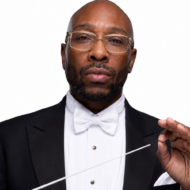

By Jarvus Ricardo Hester
At moments of generational transition, leadership often emerges not from ambition alone, but from responsibility — the sense that one has inherited unfinished work.
For Zeb Taylor, that call began long before his decision to run for the United States House of Representatives in Virginia. It began in community rooms, organizing spaces, and classrooms where policy met lived experience — and where he first understood that systems shape whether communities thrive or struggle.
“I felt the need to step up,” Taylor explains. “To take what I learned — in political science, in law, and in organizing — and apply it in a way that makes a real difference in people’s lives.”
Before entering electoral politics, Taylor worked as a community organizer and later with Planned Parenthood, experiences that grounded his understanding of public policy in direct service and advocacy. That background continues to shape his political philosophy: that governance should function as infrastructure for human dignity, not merely administration.
His focus is distinctly communal.
Taylor speaks often about building systems — not only physical infrastructure, but social and civic frameworks that allow communities to support one another rather than compete for scarcity. He envisions public investment in programming, access, and opportunity that strengthens neighborhoods as interconnected ecosystems.
“We should be supporting one another,” he says. “Community shouldn’t feel dog-eat-dog. It should feel like shared progress.”
This orientation places Taylor within a lineage of leaders who view politics as collective stewardship rather than individual ascent — a perspective increasingly resonant among younger generations seeking more cooperative models of public life.
He is also candid about identity. Taylor identifies as pansexual, a dimension of self he discusses not as a political posture but as part of a broader belief that authenticity and public service need not be in conflict. Representation, in his view, expands when leaders show up fully as themselves.
Charismatic and analytically sharp, Taylor moves easily between policy discussion and human narrative. Colleagues and observers often note his capacity to translate complex political ideas into accessible language — a skill rooted in his organizing background, where persuasion depends on trust rather than rhetoric alone.

Asked what he would say to a young person pursuing purpose, his answer is succinct:
“Keep believing. Keep fighting.”
That message carries particular weight in a moment he describes as generational passage. Reflecting on the recent loss of civil rights leaders, including Rev. Jesse Jackson, Taylor situates his candidacy within a continuum of movement history:
“We have lost many leaders of the Second Civil Rights Movement — John Lewis, Elijah Cummings, Nikki Giovanni, Toni Morrison, and now Jesse Jackson. As the third civil rights movement reaches its apex, we must commit more than ever to fulfilling the vision of past pioneers. We owe it to visionaries we never met and will never meet — those who gave themselves to secure freedoms they would never see. We must not waste their sacrifice. There is a rebirth in loss. Though we grieve now, I’m confident the next generation stands ready to take up our ancestral task.”
It is language steeped in historical consciousness — the sense that leadership is inherited, not invented.
As a candidate, Zeb Taylor represents more than policy positions. He embodies an emerging political ethos: communal, systems-oriented, identity-honest, and shaped by organizing rather than hierarchy. Whether on the campaign trail or in civic dialogue, his message returns to a consistent premise — that democracy functions best when communities rise together.
In that belief, a new generation steps forward.