
January 22, 1964
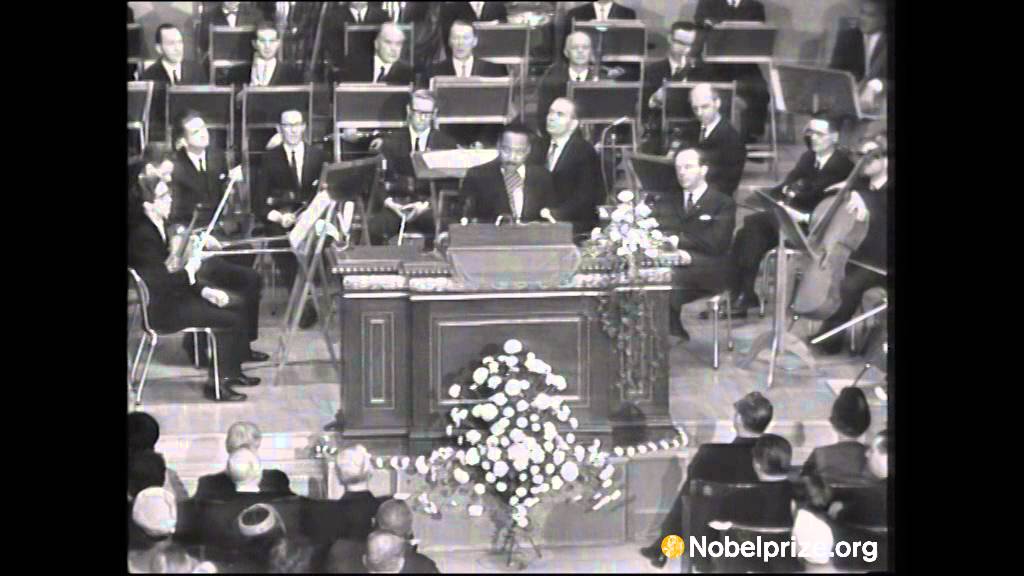
On a crisp January day in 1964, the world paused to recognize the extraordinary courage of a man born in Atlanta, Georgia, whose dream had already begun to reshape a nation. Dr. Martin Luther King Jr., already a defining voice of the civil rights movement, received the Nobel Peace Prize, a monumental acknowledgment not just of one man, but of an entire movement fighting for equality, justice, and human dignity.
King’s path to this honor was paved with the weight of history and the courage to confront injustice without yielding to fear. From leading the Montgomery Bus Boycott to organizing the March on Washington, his life was a testament to the transformative power of nonviolent resistance. Every speech, every march, every act of civil disobedience was grounded in a vision: a world where freedom and opportunity were not determined by the color of one’s skin.
Receiving the Nobel Peace Prize amplified that vision to the world. It sent a message: the struggle for justice is not bound by borders, and the courage to demand equality can echo across nations. For King, the award was both recognition and responsibility. It reminded the world—and reminded him—that the work of change is ongoing, and that the dream of a fair and just society is a collective endeavor.

In Harlem, the neighborhood that has long celebrated Black achievement and creativity, King’s recognition was a source of pride and inspiration. Artists, educators, activists, and everyday citizens drew strength from his words and example, seeing in his accomplishment a reflection of what dedication, courage, and moral clarity could achieve.
Today, as we mark January 22, 1964, we honor Dr. King’s legacy and the movement he led. His Nobel Peace Prize reminds us that justice is possible, that courage can change hearts and laws, and that every generation has the power—and the responsibility—to continue the work of equality and human dignity.
By Jarvus Ricardo Hester