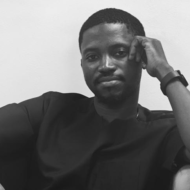

By Minkail Olaitan
I was in the room when the first clocks started. SQI College of ICT, Ogbomoso, on a Friday that had been advertised as a one-day tournament and then quietly became something else. Students and staff filled the space the way people fill a laboratory when the experiment is simple and the stakes are not: a board, a chair, an opponent who will not flatter you. The Gift of Chess had sent the sets. I had the small job of seeing them land. By mid-morning, the donation had stopped looking like charity. It looked like furniture the school had been waiting to admit it needed.
Ogbomoso is not the city the tech brochures photograph first. It is old, busy, and already educating people the coastal conversation often skips. SQI has worked here since 2008 under a sentence that does not waste itself: making Africa a tech continent, one mind at a time. Code is their usual instrument. On Friday, the instrument had sixty-four squares. The kinship is not cute. A developer who cannot sit with delay will ship noise. A player who cannot sit with delay will hang a queen. Both crafts punish the mind that wants applause before calculation. That is the camaraderie: not a photo opportunity between two hobbies, but two disciplines that train the same muscle.

Tunde Onakoya joined from Ghana on a screen that, for an hour, stopped being a screen. Chess in Slums Africa began when he walked into Majidun with a board and the unfashionable idea that a child written off as scenery could learn a game the world still treats as prestige. He likes to say chess is a great equaliser. He has also said the miracle of the game is the pawn’s right to become a queen. Those lines did not sound imported in Ogbomoso. They sounded like the brief. Coach Russ Makofsky, president of Gift of Chess International, was on the same call. Gift of Chess has been putting sets into schools, prisons and settlements across dozens of countries, some of them cut from waste plastic, all of them carrying the same stubborn instruction: let each one teach each one. For a while, the map collapsed. Ghana, New York’s idea of a million boards by 2030, and a hall in Oyo State were one problem set.
What SQI did with the gift is the part worth keeping. They did not park the boards in a display case and call it partnership. They folded chess into the extra life of the college: competition as curriculum, silence as a skill, consequence as a tutor. You could see it in the way a student who spends weeks inside syntax treated a closed file. You could see it in staff who stayed past the polite hour. Technology does not civilise a continent. Minds do. Minds trained to think, build, wait, and live with the move they cannot take back.

Chess in slums, in IDP camps, in Kenyan factories that turn bottles into knights, has already proved the board travels where policy is late. SQI’s wager is that an ICT campus in a historic Yoruba city can use the same tool without pretending it is a novelty act. The tournament will not be remembered first for a winner. It will be remembered as the day a gifted board found a school, and the school treated thinking as an extracurricular that belongs beside code.
There was a chessboard in Ogbomoso today. The next move is still unplayed. That is the correct ending for both a game and a college that claims to build a continent one mind at a time.

THE MOOD QUESTION
What happens when we give young people more tools to think, create, and imagine their future?
Is there a skill, game, mentor, or experience that changed the way you think about what was possible for you?

STAY IN THE MOOD
Sometimes the most important part of education happens outside the classroom.
A chessboard can teach patience. Code can teach problem-solving. A community can teach possibility. Together, they can give a young person another way to imagine what comes next.
Continue exploring the people, ideas, and communities shaping our world with Mood Magazine NYC and WHRL Mood Radio Harlem.
Read Mood. Listen to WHRL. Watch Mood TV. Live the culture.
Let us curate your Mood.
Mood Magazine. Mind. Body. Spirit. Culture. Harlem to the world.