
With A Different World coming back and Saint Augustine’s University filing for bankruptcy, I couldn’t help but wonder: Are we nostalgic for the college experience—or for the possibility of a future?
I have a confession to make.
When I heard that A Different World was coming back, a very specific part of my brain immediately went to Hillman.
The dorm rooms.
The clothes.
The parties.
The arguments that somehow turned into philosophy lectures.
The boys.
The girls.
The professors who seemed to know everything.
And that particular kind of Black college confidence that said:
Yes, I am figuring out my life—but I already know I am going somewhere.
There was something intoxicating about it.
Hillman wasn’t just a college.
It was a mood.
It was the possibility of becoming.
And perhaps that’s why the idea of returning to the world of A Different World feels so exciting. We aren’t simply being invited back to a television show. We’re being invited back to a place many of us remember as one of the first times television allowed young Black people to be complicated, brilliant, ridiculous, ambitious, romantic, political and completely alive.
Then I read about Saint Augustine’s University.
And suddenly my nostalgia had a question for me
What happens when the real-world Hillmans can’t afford to stay open?

A Little Reality Check
Saint Augustine’s University is not fictional.
It is a historic HBCU in Raleigh, North Carolina, with generations of students, alumni, professors, families and memories attached to its name.
And now it is in bankruptcy.
The financial troubles surrounding the university are serious: enormous debts, federal obligations, declining enrollment, accreditation struggles and years of instability have placed the institution’s future in jeopardy.
And when an HBCU reaches this point, we’re not simply talking about a troubled organization.
We’re talking about students.
Students who arrived on campus imagining graduation.
Students whose financial aid, credits and degrees are tied to an institution whose future suddenly feels uncertain.
We’re talking about professors.
Staff.
Alumni.
Families.
A community.
And that’s where this stopped feeling like another education headline.
Because what does it mean to tell young Black people that education is one of their greatest pathways toward opportunity while some of the institutions specifically created to educate them are struggling to survive?
It’s a little like telling someone the party is upstairs while quietly removing the staircase.

Welcome to Hillman
When A Different World arrived on television, it gave America something that shouldn’t have felt revolutionary but somehow did.
Black people simply living.
Not surviving somebody else’s crisis.
Not existing solely to explain racism.
Not serving as somebody else’s best friend.
Going to college.
Falling in love.
Getting on each other’s nerves.
Changing majors.
Having sex.
Talking about politics.
Talking about God.
Talking about money.
Talking about race.
Talking about absolutely nothing.
And somehow all of it mattered.
Hillman allowed Blackness to expand.
You could be brilliant and ridiculous.
Beautiful and insecure.
Political and romantic.
Traditional and rebellious.
You could know exactly where you were going on Monday and have absolutely no idea by Friday.
In other words, you could be young.
And isn’t that one of the great privileges college is supposed to give us?
A few precious years when you don’t necessarily have to know who you’re going to become yet.

But Here’s the Thing About Nostalgia…
Nostalgia has excellent lighting.
Everything looks a little better through it.
We remember the Hillman sweatshirts.
The hairstyles.
The clothes.
The courtyard.
The friendships.
The romances.
We remember the feeling.
But nostalgia rarely shows us the accounting department.
Real institutions require some decidedly unromantic things to survive.
Money.
Enrollment.
Accreditation.
Endowments.
Buildings.
Faculty.
Financial controls.
Leadership.
Infrastructure.
And people willing to invest in them before there is a crisis.
There isn’t a sitcom laugh track when the IRS sends a bill.
Nobody cues the romantic soundtrack when accreditation is threatened.
And I doubt Netflix is rushing to greenlight a twelve-episode series about an HBCU administrator trying to make payroll on Friday afternoon.
But perhaps that’s precisely the conversation we need to have.
Because loving the idea of an HBCU and sustaining an HBCU are two entirely different things.

Everybody Loves the HBCU Right Now
And that’s what makes this moment so interesting.
HBCU culture is everywhere.
Homecoming has become a destination.
Marching bands go viral.
Fashion brands borrow the aesthetic.
Corporations announce partnerships.
Celebrities celebrate their HBCU connections.
College football classics have become cultural events.
Documentaries explore the history.
Social media packages the experience for another generation.
And now Hollywood wants Hillman again.
Everybody seems to love the idea of the HBCU.
But I couldn’t help but wonder:
Do we love HBCUs enough to sustain the actual institutions?
Because culture is wonderful.
Culture without infrastructure is fragile.
The sweatshirt cannot replace the endowment.
The homecoming cannot replace sound governance.
The viral marching-band clip cannot solve a financial crisis.
And a fictional Hillman cannot educate an actual student.
What Would Today’s Hillman Look Like?
This is where I get excited about the new A Different World.
Because please—
don’t give me a nostalgia museum with Wi-Fi.
I don’t need everybody walking around making references to 1989 while holding newer phones.
Give me today’s Hillman.
I want students arguing about artificial intelligence.
I want somebody launching a company from their dorm room and discovering that entrepreneurship looks considerably sexier on Instagram than it does at 3:17 in the morning.
I want student debt.
I want class.
I want Black students debating whether America is still where they imagine building their futures.
I want somebody trying to figure out what it means to be queer on an HBCU campus.
I want faith.
I want politics.
I want fashion.
I want sex.
I want friendship.
I want ambition.
I want failure.
I want somebody calling their mother crying because they just discovered adulthood is expensive.
I want somebody else calling home because they just accomplished something nobody in their family has ever accomplished before.
I want the first-generation student.
The legacy student.
The rich kid.
The kid working two jobs.
The activist.
The Republican.
The radical.
The church girl.
The queer kid.
The athlete.
The artist.
The person who came to college convinced they were going to become a doctor and discovered sophomore year that they really want to make films.
In other words:
I want life.
Because that’s what made Hillman matter in the first place.
It wasn’t perfect.
It was alive.

And Then There Is Saint Augustine’s
Maybe that’s why Saint Augustine’s belongs in this conversation.
Because universities can become abstractions when we talk about them from far away.
Enrollment.
Debt.
Accreditation.
Liabilities.
Bankruptcy.
But walk onto an HBCU campus and those words begin to feel inadequate.
You’re walking through somebody’s memory.
Somebody met their husband there.
Somebody pledged there.
Somebody discovered their voice there.
Somebody performed their first concert there.
Somebody met the professor who changed the trajectory of their life there.
Somebody walked onto that campus as the first person in their family to attend college.
Somebody’s grandmother sacrificed so they could be there.
Somebody discovered, perhaps for the first time, what it felt like to enter an academic environment where Black intelligence wasn’t an exception.
How exactly do you put that on a balance sheet?
You can’t.
But you also can’t pay the electric bill with nostalgia.
And that’s the uncomfortable tension.
The cultural value can be priceless while the institution itself still has bills to pay.
Maybe We Need to Stop Waiting for the Emergency
We have a habit of discovering institutions when they’re dying.
Suddenly everybody cares.
There are petitions.
Hashtags.
Emergency campaigns.
Alumni appeals.
News stories.
People asking how this could possibly have happened.
But institutions rarely arrive at the edge overnight.
The warning signs usually existed long before the rest of us started paying attention.
Maybe supporting Black institutions can’t only happen when the headline contains the word crisis.
Maybe the conversation has to begin while the doors are still open.
Attend the performances.
Send students.
Hire the graduates.
Partner with the faculty.
Support the businesses alumni create.
Donate.
Mentor.
Serve.
Ask questions about leadership.
Pay attention to governance.
Expect excellence.
Demand accountability.
Because support and accountability aren’t opposites.
If anything, the institutions we love deserve both.

So, What Are We Actually Trying to Save?
Maybe this isn’t really a story about bankruptcy.
And perhaps it isn’t really about a television reboot either.
Maybe it’s about imagination.
Before you can build a different world, you have to be able to imagine one.
Hillman gave millions of people that imagination.
It showed Black young people walking across a campus toward futures that hadn’t been completely written yet.
But real HBCUs have spent generations doing something television never could.
They turned imagination into infrastructure.
Degrees.
Doctors.
Teachers.
Artists.
Scientists.
Lawyers.
Entrepreneurs.
Musicians.
Engineers.
Leaders.
Families.
Communities.
Legacies.
So when A Different World returns, I won’t only be thinking about the characters.
I’ll be thinking about the young person watching who has never stepped foot on an HBCU campus.
Maybe they’ll see themselves.
Maybe they’ll start researching schools.
Maybe they’ll imagine walking across a campus.
Maybe Hillman will once again make some kid somewhere think:
I could belong there.
And then comes the responsibility of the rest of us.
Making sure “there” still exists.
Because Imagine the Irony
We could rebuild the dorm rooms.
Recreate the courtyard.
Update the clothes.
Write new romances.
Introduce a new generation of students.
Bring Hillman back to life on television.
And at exactly the same moment, allow real Black colleges to disappear from the American landscape.
What an extraordinary contradiction that would be.
Perhaps the return of A Different World shouldn’t only make us nostalgic.
Maybe it should make us curious.
About the HBCUs in our own communities.
About their students.
Their finances.
Their leadership.
Their successes.
Their problems.
Their futures.
And our relationship to them.
Because perhaps the question isn’t:
Do we still love Hillman?
Of course we do.
The more important question is:
Do we love what Hillman represents enough to protect the places making that possibility real?

The Mood Question
If we celebrate HBCU culture in our television, fashion, music, sports and social media, what responsibility do we have to make sure the institutions themselves survive for another generation?

Stay in the Mood
Maybe the return of A Different World gives us an opportunity to do more than remember.
Watch the show.
Talk about the characters.
Pull out the Hillman sweatshirt.
Introduce somebody younger to the world so many of us fell in love with.
But then look beyond the screen.
Learn about an HBCU.
Visit one.
Attend the concert.
Go to the game.
Read the student newspaper.
Hire the graduate.
Support the alumni-owned business.
Give when you can.
And pay attention before there’s an emergency.
Because cultural institutions don’t survive on nostalgia.
They survive because generation after generation decides they’re still worth building.
Hillman taught us to imagine a different world.
Real HBCUs have been building one for generations.
And if that’s the world we’re trying to preserve, darling, that’s a reboot worth watching.
Watch: A Different World
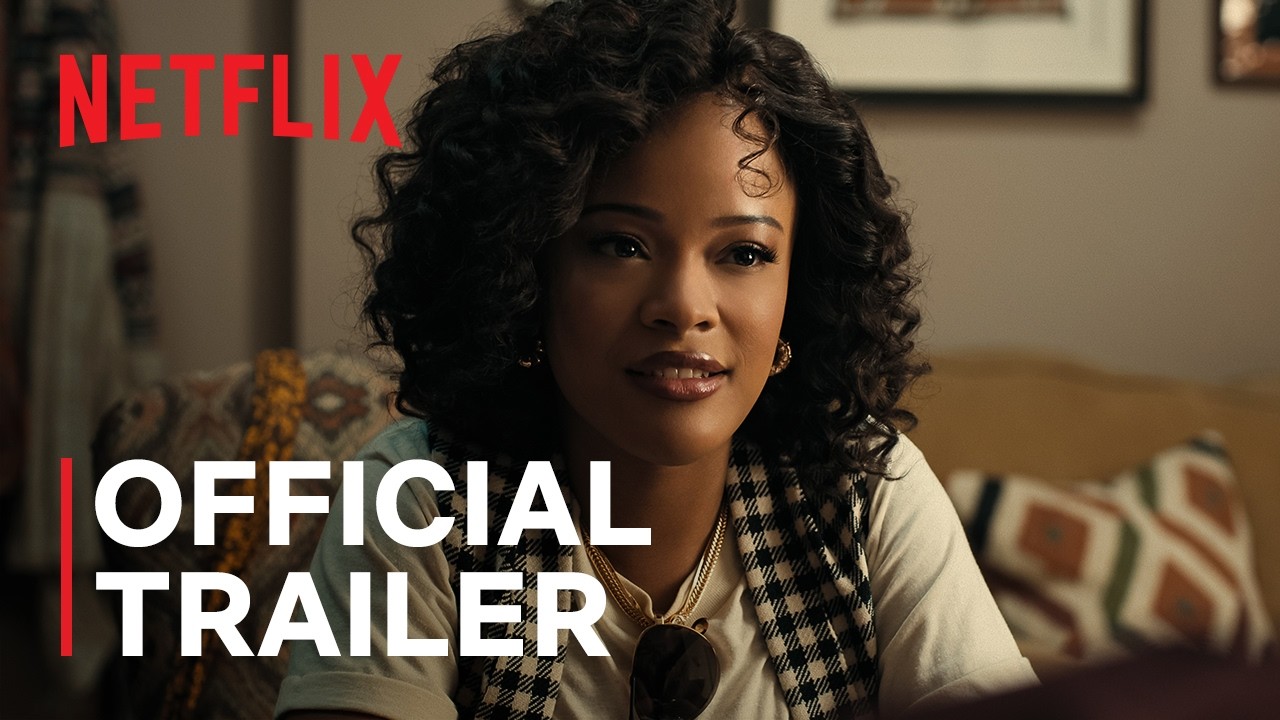
Now that we’ve talked about what Hillman represented—and what the real institutions behind that dream are facing—take a look at the trailer for Netflix’s new A Different World.
Watch the trailer below, then tell us: What do you want the new Hillman to say about Black college life today?
Remember the story. Invest in the future. Build a different world. Stay in the Mood.
Mood Magazine. Mind. Body. Spirit. Culture. Harlem to the world.