
By Minkail Olaitan
“Creativity is the greatest rebellion in existence.” — Osho
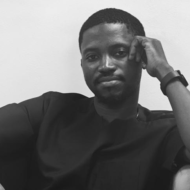
Some artists change costumes. Ọláwálé Ọlọ́fọ̀rọ̀, whom the world calls Brymo, changes weather. He rewrites the rules one project at a time, with the unflinching demeanour of an artist who has already decided that the room will adjust to him.
Rebellion, in art, is not a haircut. It is the decision to refuse the room that already knows how to clap. Pablo Neruda said it without blushing: poetry is rebellion. When they called the poet a rebel, he was not daunted. Life, Neruda argued, is more important than social structures; there are new regulations for the soul. James Baldwin, a writer whose sentences still travel from Harlem into every serious African notebook, placed the same burden on the maker. The artist cannot and must not take anything for granted. He must drive to the heart of every answer and expose the question the answer hides. Artists, Baldwin said elsewhere, are here to disturb the peace. Charles Bukowski, rougher in the mouth, understood rebellion as a way of pulling truth from the deep source: if it does not come unasked out of the heart and the mind and the mouth and the gut, do not do it. The way to create, he wrote, is to burn ordinary concepts and substitute new truths that run down from the head and out of the heart.

Brymo has spent the last stretch of his catalogue living inside that old argument. He could have remained the singer of “Ara,” a voice the radio already understood. He chose weather instead of wardrobe. Yellow, then the twin doors of 9: Èsan and 9: Harmattan & Winter, then Theta, then Macabre, then the double storm of SHAITAN: Telekinesis and Àródan. Each record is a different temperature of the same body. The voice stays earthen: gravel, smoke, a throat left overnight in harmattan. Around it, the metal shifts. Guitar becomes piano. Pidgin becomes Yoruba. Reggae becomes neo-folk. The man keeps choosing his topic and his medium as Baldwin required, even when the chosen medium will not trend.
Yellow, released on the first day of April 2020, is the hinge. He called it love and survival. Critics heard hedonism and found, underneath, a black politics that would not stay polite. Three suites. English, Pidgin, Yoruba, a flash of Igbo. Electronic sheen over folk bone. “Black Man, Black Woman” is not a slogan. It is an instruction to stop performing race as costume and start living it as work. Toni Kan once wrote that if Fela and Majek Fashek had a love child, the child would be Brymo. On Yellow, that inheritance is audible: the protest is in the arrangement as much as in the sentence. Joy Dennis, writing in The Lagos Review, called the album a masterpiece of musings on love, psychology, African society and the black man. The colour in the title is not sunshine. It is the light that arrives after Oṣó had gone almost too dark to see. Perhaps, not darkness of total oblivion, but one which takes a pose of fundamental where things shoot out.

Then he split himself in two and released both halves on the same day, 9 September 2021. Èsan is Yoruba for revenge: nine tracks of Afro-soul and folk in the mother tongue, produced by Mikky Me Joses. Masculinity, karma, self-adulation, the old economy of wound and reply. Harmattan & Winter, produced by Bigfoot, is the English twin: insufficiency walking toward abundance, heartbreak learning monogamy, mental weather named without apology. “We All Lose Sometimes.” “There’s a Place.” The pairing is African philosophy in form. The self is not one language. Healing is not one season. Harmattan dries. Winter clarifies. Revenge, in the Yoruba half, is not petty score-settling. It is the moral physics of a world that still believes action returns. Neruda would have recognised the gesture: the poet going into the street, taking part in combat after combat, unoffended at being called subversive.
Theta, May 2022, is the laboratory. Ten songs, all Pidgin, folk and quiet storm. Brymo called it a study of humanity’s struggles and a view into what might have been: fiction, research, a scientific retelling of crucial stories. Survival, prudence, abuse, hypocrisy, communal violence, love that arrives after the evidence. The metallic layering here is thinner, almost bare. The voice is the instrument. Pidgin, that democratic tongue of the Nigerian street, becomes scripture. He is no longer translating the village for the city. He is letting the city confess in the language it actually speaks at midnight. Baldwin’s demand is met in the choice itself: topic and medium selected against the market’s preference for English polish and Afrobeats speed.

Macabre, December 2023, turns the confession into a reckoning with death that is not only biological. He announced it as a reggae album sung in English. The titles do the theology: “The Day Entropy Died,” “Truth Is the New Cool,” “Schadenfreude,” “Monster,” “The Universe Is Ours.” Afrocritik heard a preacher without a church. That is not an insult if the pulpit is the song. Macabre, as a word, is the grin on the skull. Brymo uses it as a method: look at the ugly until it becomes usable. Mental reconstruction, in this chapter, is not self-care. It is the refusal to decorate rot. Bukowski’s burning of ordinary concepts is here in the titles alone.
Then Christmas Day 2025, SHAITAN, another double body. Telekinesis in English. Àródan in Yoruba. Power, guilt, survival, the fool’s errand. Àródan is the wild goose chase you send a child on, the mirage you are told to fetch. He sings that he has found it and wants it taken from his hand. Telekinesis opens toward Mother and God, desire tangled with inquiry, thought as a force that moves objects and ruins them. Reviewers heard Eṣù and Shaitan occupying the same chair. Controversy followed, as it always does when an African artist refuses to keep the sacred and the infernal in separate rooms. That refusal is the philosophy. If the mind can move matter, the mind can also heal it. If the mind can curse, the mind can reconstruct. The album does not offer a hymn of comfort. It offers a map of consequence.
Across these records, the craftsmanship is the same even when the costume changes. Precise lyrics. Daunting remarks. A voice that exposes a listener to several emotions in one phrase: tenderness, scorn, prayer, mockery, grief. The sonic layering is metallic in the old sense: beaten, alloyed, able to hold an edge. Storytelling remains the spine. There is always a fiction inside the confession, a research inside the cry. He hovers many personae at once: sage, Africanist, poet, philosopher, rebel, questioner, artist. The discography does not ask you to choose. It narrows them, at last, to one unmistakable form. Truth. Not truth as branding. Truth as the thing that remains when the beat has been stripped and the language has been returned to the mouth that first owned it.
Brymo is, no doubt, in the league of the artist Osho was referring to when he said, “The artist must live in rebellion because creativity is the greatest rebellion in existence. To be creative, eliminate all conditionings; otherwise, creativity becomes a mere copy.”
His relevance to African thought is that he treats music as apparatus, not ornament. A song can be a clinic. A record can be a reconstruction site. Yellow teaches survival as love’s other name. Èsan and Harmattan & Winter teach that seasons and languages are technologies of the self. Theta teaches that Pidgin can carry tragedy without costume. Macabre teaches that looking at death is a civic act. SHAITAN teaches that the chase itself may be the punishment, and that returning the mirage is a kind of freedom. Culture is influenced not only when a chorus goes national. It is influenced when a generation learns that an album can be a thinking tool.

In 2014, the All Africa Music Awards named him Songwriter of the Year. Peers and critics have spent a decade placing him beside Asa at the top of Nigerian composition, that rare altitude where the line is as important as the hook. What the serious listeners recognised, even when the mainstream wanted another club record, is the same thing Baldwin required and Neruda blessed and Bukowski dragged out of the gut: an artist who would rather lose the room than lie to it.
He is not easy. The man and the work have quarrelled in public. That quarrel is part of the instrument. A healer who has never been ill is only a brochure. Brymo keeps walking out of his own fire with another album in his hands, the voice still low, the philosophy still unwilling to sit down. Listen long enough and the gamut arrives at once: earth, metal, prayer, insult, winter, yellow light. Then the single form again. Truth, sung as if it had a body. A rebel, finally, not against applause, but against the song that costs nothing.

QUESTION OF THE DAY
When an artist refuses to create for the approval of the room, does that rebellion become the very thing that gives the work its power?
STAY IN THE MOOD
Keep listening. Keep questioning. Keep creating.
Brymo reminds us that art does not always have to make us comfortable. Sometimes the necessary song is the one that makes us stop, think, feel, and question what we thought we already knew.
Stay curious. Stay creative. Stay in the Mood.