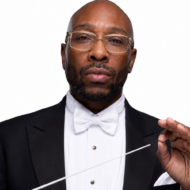

As Lonnie Bunch prepares to leave the Smithsonian, the question is bigger than one museum. It is about who gets to decide which histories America remembers, which stories become national memory, and what happens when the truth becomes contested.
By Mood Magazine NYC
For nearly four decades, Lonnie G. Bunch III worked inside one of America’s most important institutions with a deceptively simple idea: history matters because people matter.
On September 8, Bunch announced that he would retire as Secretary of the Smithsonian Institution at the end of 2026, closing a career that has stretched across nearly 38 years of Smithsonian service. He became the institution’s 14th Secretary in 2019, the first African American and the first historian to hold the position.
But his most visible legacy began long before he became Secretary.
In 2005, Bunch became the founding director of what would eventually become the National Museum of African American History and Culture. At the time, there was no building, no collection, no funding and a staff of one.
There was an idea.
And there was a question.
Would America finally build a place where Black history was not treated as a footnote to American history, but as American history itself?
Bunch spent the next 11 years helping turn that question into a building on the National Mall.
The museum opened in September 2016.
Since then, it has welcomed more than 13 million visitors and assembled a collection of more than 45,000 artifacts and works of art.
That is not simply the story of a museum.
It is the story of who gets remembered.

THE MUSEUM WAS NEVER JUST ABOUT BLACK HISTORY
There is an easy mistake people make when discussing the National Museum of African American History and Culture.
They imagine that its purpose is simply to preserve the history of Black Americans.
It does that.
But the deeper purpose is to help America understand itself.
You cannot tell the story of American democracy without discussing slavery.
You cannot tell the story of American labor without discussing Black workers.
You cannot tell the story of American music without discussing Black creativity.
You cannot tell the story of American cities without discussing migration, segregation, entrepreneurship, protest and community building.
You cannot tell the story of American culture without acknowledging the people whose contributions were often absorbed into the culture while their names were left out of the credits.
This is why museums matter.
They are not neutral rooms filled with old objects.
They are choices.
Someone decides what is collected.
Someone decides what is displayed.
Someone decides what receives an entire wall.
Someone decides what gets a paragraph.
Someone decides what children are taught.
Someone decides what deserves to be remembered.

WHOSE MEMORY BECOMES NATIONAL MEMORY?
In June, Bunch wrote that the Smithsonian serves as a keeper of the nation’s memory.
That phrase matters.
Because memory is power.
A nation does not remember everything equally.
Some stories become monuments.
Some become textbooks.
Some become holidays.
Some become museums.
Others survive only because a grandmother told the story, a church kept the records, a neighborhood passed down the photographs, or a community refused to forget.
Black America has always had to become its own archivist.
The church bulletin.
The family Bible.
The photograph album.
The oral history.
The neighborhood newspaper.
The beauty shop.
The barber shop.
The historically Black college.
The Black-owned bookstore.
The community center.
These places have preserved histories that institutions did not always consider important enough to preserve.
Bunch’s career represents something significant because he helped move some of those stories from the margins of American memory into the center of the national conversation.

THE NATIONAL MALL CHANGED
When the National Museum of African American History and Culture opened, its location was part of the statement.
The National Mall is where America places its symbols.
Presidents.
Wars.
Founders.
Astronauts.
Monuments.
Memorials.
And now, Black history.
Not tucked away in a neighborhood.
Not confined to a temporary exhibition.
Not presented as an optional subject.
On the National Mall.
That physical placement matters because geography communicates value.
Where a nation places a story tells you something about how seriously it wants that story taken.

THE NEXT CHAPTER IS THE REAL QUESTION
Bunch’s retirement arrives at a complicated moment.
The Smithsonian has become increasingly involved in national debates about how American history should be presented, particularly as the country approaches its 250th anniversary.
The institution has faced political pressure over the way its museums present difficult chapters of American history. The Smithsonian Board of Regents says it will focus on stability during the transition and eventually conduct a national search for Bunch’s successor.
That makes the question of succession larger than a personnel change.
Who comes next?
And perhaps more importantly:
What kind of historian does America need next?
A historian who makes everyone comfortable?
Or one who makes everyone curious?
A museum leader who smooths the rough edges?
Or one willing to explain why those rough edges exist?
A storyteller who tells America what it wants to hear?
Or one willing to tell America what it needs to know?
Bunch himself has argued that loving the country requires understanding its history in full, including the difficult parts.
That is not an argument against patriotism.
It is an argument for a more mature version of it.

HISTORY IS NOT A THREAT
There is a strange idea that acknowledging painful history somehow diminishes a country.
It doesn’t.
A country is not weakened because we learn what happened.
It is weakened when we refuse to learn.
History is not an accusation.
It is information.
The point of remembering slavery is not to make America permanently ashamed.
The point is to understand how slavery shaped the economy, politics, geography, law and culture that followed.
The point of remembering segregation is not to remain trapped in 1960.
The point is to understand how its consequences continued to shape housing, education, wealth and opportunity.
The point of remembering Black resistance is not simply to celebrate the past.
It is to understand how ordinary people changed institutions that once seemed impossible to change.
This is why museums matter.
They give context to memory.

WHAT HAPPENS AFTER THE BUILDER LEAVES?
Bunch leaves behind an institution that did not exist when he walked through its doors in 2005.
He also leaves behind a challenge.
The museum must continue to evolve.
The Smithsonian must continue to collect.
Communities must continue to tell their stories.
Young people must continue asking difficult questions.
And the country must continue expanding its definition of who belongs inside the American story.
Because the story is not finished.
Neither is the archive.
Neither is the argument.
And neither is America.
Perhaps that is the most important part of Lonnie Bunch’s legacy.
He did not simply help build a museum.
He helped create a permanent space for a question that America has been wrestling with for generations:
Who gets to tell the story?
The answer cannot belong to one person.
It belongs to all of us.
But we should be very careful about who we trust to hold the microphone.

QUESTION OF THE DAY
If you could add one overlooked Black story, person, neighborhood, invention, or movement to America’s national history, what would you make sure the next generation knew?
STAY IN THE MOOD
Don’t just read the story. Live it.
Explore New York with Mood Magazine NYC. Discover the people, places, businesses, culture, and experiences that make the city extraordinary.
Listen to WHRL Mood Radio and let us soundtrack your day with music, culture, conversation, and stories from Harlem to the world.
Watch Mood Television for original programming, interviews, performances, and conversations with the people shaping our culture.
Experience the arts with Harlem Collective Opera, Harlem Boys Choir, and Harlem Chamber Orchestra, and discover performances that bring audiences closer to the music.
Read. Listen. Watch. Experience. Go.
This is more than a magazine.
This is your invitation to Live Your Mood.
Mood Magazine NYC
Mind. Body. Spirit. Culture. Harlem to the World.