
In a musical landscape often shaped by tradition and rigid institutional history, soprano Karen Slack stands at a rare and compelling intersection—where legacy meets reinvention, and technical brilliance meets cultural urgency. Her voice, both luminous and grounded, carries a resonance that is immediately recognizable: rich in color, precise in control, and deeply expressive in emotional range. Yet what truly distinguishes Slack is not only the mastery of her instrument, but the clarity of her artistic purpose.
Across major concert halls, orchestral stages, and international appearances, Slack has cultivated a career defined by discipline, artistry, and intention. Her performances are never simply presentations of repertoire; they are interpretations shaped by intellect, lived experience, and a profound respect for the emotional architecture of music. Whether performing classical art song, symphonic works, or contemporary compositions, she brings an interpretive depth that invites audiences to experience familiar works with renewed attention and unfamiliar works with immediate connection.
Her artistry exists within a lineage of excellence, but it is not confined by it. Instead, Slack expands the boundaries of what operatic and concert performance can communicate in the present moment. There is a quiet authority in the way she occupies the stage—an ability to balance vocal power with vulnerability, precision with spontaneity, tradition with individuality. It is this balance that has positioned her as one of the most compelling American sopranos of her generation.

Beyond performance, Karen Slack has also emerged as a vital voice in the ongoing conversation about equity and access within classical music. She has consistently used her platform to advocate for broader representation, greater visibility for underrecognized composers and artists, and a more honest reflection of the cultural diversity that exists within the global classical tradition. In doing so, she embodies a modern model of the performing artist—one who is not separate from cultural discourse, but actively shaping it.
This dual identity—artist and advocate—gives her work a particular weight in today’s cultural climate. Slack is not simply preserving tradition; she is participating in its transformation. Her presence within the field signals a broader shift in classical music toward inclusion, narrative expansion, and institutional accountability.
This moment marks a significant continuation of that trajectory.
As Karen Slack prepares for her upcoming appearance with Mood Media and Mood Magazine NYC, the conversation surrounding her work expands beyond the concert stage and into the realm of cultural storytelling. Mood Magazine, with its commitment to highlighting Harlem’s creative ecosystem and elevating diasporic artistry across music, fashion, cuisine, and performance, provides a natural extension of Slack’s artistic ethos. The collaboration becomes more than a feature—it becomes a meeting point between sound and story, between performance and public memory.
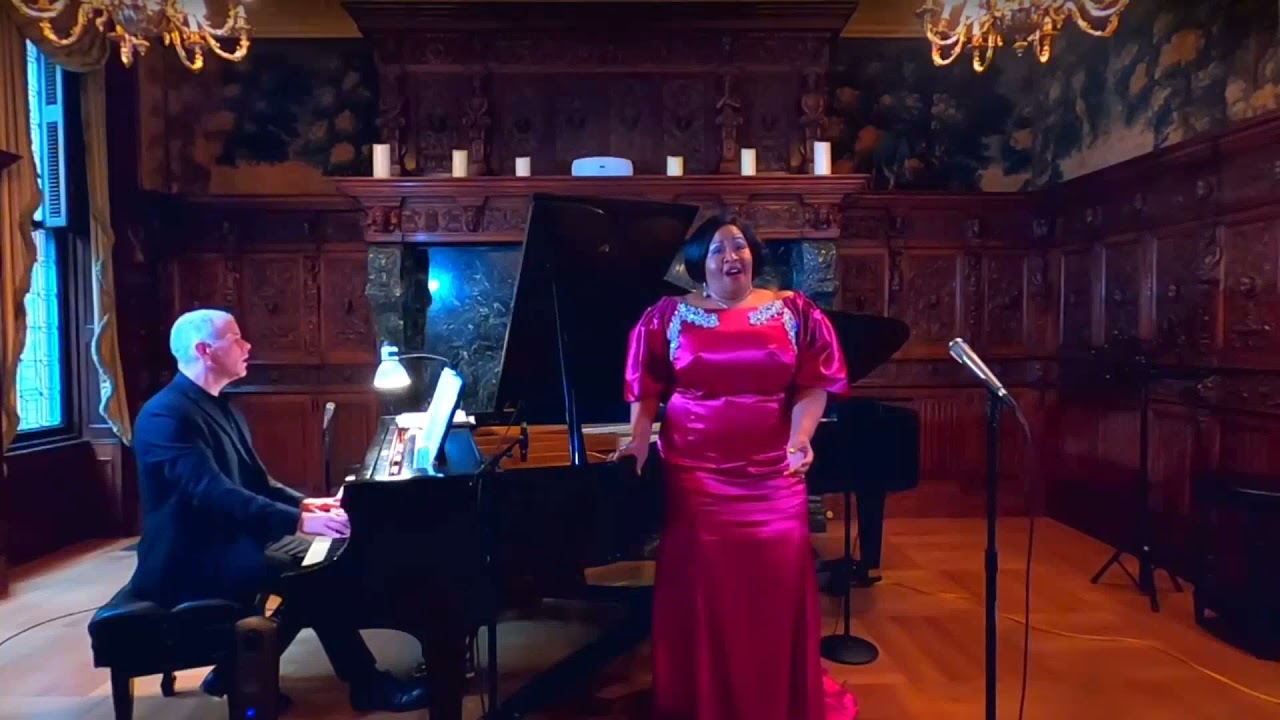
Within the accompanying video feature, audiences are invited into Slack’s artistic world in an intimate and cinematic way. The work reveals not only the refinement of her craft, but also the thought process behind it—the discipline of preparation, the emotional intelligence required for interpretation, and the personal commitment that sustains a career at the highest level. In these moments, viewers encounter an artist who understands that music is not static. It is living, responsive, and continuously shaped by the people who perform and receive it.
In a broader sense, this feature also reflects Mood Magazine’s ongoing mission: to position world-class African American and diasporic artistry at the center of global cultural dialogue. Through storytelling that bridges Harlem’s historic legacy with contemporary creative movements, Mood continues to build platforms where artists like Karen Slack are not only showcased, but contextualized within the larger narrative of cultural evolution.
Karen Slack does not simply perform music—she inhabits it with intention, intelligence, and emotional precision. And in doing so, she reshapes the listener’s understanding of what classical music can hold, and who it is for.
In her voice, tradition is not repeated. It is reimagined.
by Jarvus Ricardo Hester