There are two Harlems: the one people come to photograph, and the one that keeps making things happen after the camera is packed away. The second Harlem is less interested in nostalgia. It is busy finding a room, tuning a piano, printing a program and convincing somebody that a Friday night is better spent listening to a live band than scrolling through another evening at home.
That is the Harlem worth paying attention to as vocalist Antoinette Montague is scheduled for the Harlem Jazz Series at Mount Morris Ascension Presbyterian Church on Friday, November 13. The event listing gives the performance window as 7:00 to 8:15 p.m. The date is a useful excuse to ask a question that matters well beyond one concert: what does it take to keep a neighborhood’s music scene alive when the history is famous but the work of the present is often overlooked?

The music is not a museum piece
Harlem’s relationship with jazz is so deeply woven into the city’s cultural memory that it can sometimes feel as though the story has already been told. The clubs, the musicians, the late nights, the records: all rightly celebrated. But jazz is not a period costume, and Harlem is not a backdrop. The tradition continues whenever musicians make new choices inside an old language, whenever a presenter takes a chance on a room, and whenever an audience decides to show up.
Montague belongs to that present tense. A jazz and blues vocalist, educator and producer, she has performed at New York venues including Dizzy’s Club and the Blue Note. Her public biography describes mentorship from the late singer Etta Jones, an important connection to a generation that understood jazz singing as both craft and conversation. Montague’s work also reaches beyond the bandstand: she hosts “Jazz Woman to the Rescue!” on WHCR 90.3 FM, the City College station that has long served Upper Manhattan and its listeners.

That radio connection is more than a biographical footnote. Radio makes music available to people who may not have the time, money or mobility to get to a performance. A live show offers something different: the small thrill of being in the same room when a phrase turns, a solo stretches, or a singer changes the temperature of the evening. When an artist works in both spaces, the bridge between listener and audience becomes a little easier to cross.
A singer, a broadcaster, a jazz advocate
In September 2024, WBGO reported that Montague had become chair of its Community Advisory Board. The Jazz Journalists Association named her a 2024 Jazz Hero, recognition of the work people do to strengthen jazz communities. Those details help explain why her career is interesting beyond the question of vocal style. She is part of the ecosystem that introduces listeners to the music, makes space for musicians and keeps the conversation going after the applause.
Jazz needs its virtuosos, certainly. It also needs its advocates, presenters, teachers, radio hosts, neighborhood institutions and the people who tell a friend, “Come with me; you need to hear this.” Cultural scenes are not sustained by legends alone. They are sustained by logistics, generosity and repetition. Somebody has to open the door every week.

Why the room matters
The Harlem Jazz Series is listed at Mount Morris Ascension Presbyterian Church, a setting that invites a different kind of listening from a late-night club. A church room can bring together music, neighborhood memory and community life in a way that a commercial stage may not. It can also make the practical questions more important: Is the room accessible? Are ticket prices within reach? Is the information easy to find? Are young listeners being welcomed? Are local musicians and production workers being paid fairly?
Those are not criticisms of a series; they are the questions that help a cultural event become a reliable part of neighborhood life. A single performance can be a lovely evening. A recurring series can become infrastructure: a place where artists build audiences, residents discover new work and the next generation learns that music is something people make in their own community.

Montague’s career gives the evening another layer. Her work in performance, education and broadcasting suggests that jazz is not only an art to be consumed. It is knowledge to be shared, a language to be learned and a community to be maintained. If Harlem is going to remain a place where jazz is heard rather than simply remembered, all of those roles matter.
The details before you go
The Hot House Jazz Guide lists Antoinette Montague for the Harlem Jazz Series on Friday, November 13, from 7:00 to 8:15 p.m. at Mount Morris Ascension Presbyterian Church, in the Mount Morris Park West area near West 122nd Street. The listing provides the church phone number, 212-831-6800. Because venue directories can format the street address differently, confirm the entrance and accessibility details before setting out.
The event listing does not establish a ticket price that Mood can independently confirm. Check the organizer’s current information through Harlem Jazz Boxx or the Hot House Jazz listing before traveling. The performance is reported here as scheduled according to those public listings; Mood has not attended the event or interviewed the artist for this article.
Harlem, keep listening
Perhaps the most romantic thing about a neighborhood music scene is also the least glamorous: it has to be maintained. It takes a calendar, a venue, a fair fee, a working microphone, an audience and somebody willing to keep doing the work. It takes listeners who understand that culture is not only something to celebrate during anniversaries. It is something to support on an ordinary Friday.
So, if the evening brings you into a room with live jazz, listen closely. And if you know a Harlem musician, presenter, radio host or small venue making room for the next sound, tell Mood. We are interested in the people who keep the music moving—not just the names already written into the history books.
The next generation needs more than a playlist
There is another audience in this story: the young person who has heard jazz as a school assignment but has never experienced the way a room changes when musicians are listening to one another. A live series can make that difference tangible. It can turn a name in a textbook into a working artist, and a musical form into something a teenager might want to study, play, produce or program.
That kind of access does not happen by accident. Presenters can build relationships with schools, offer student tickets, explain the music without talking down to newcomers and make space for emerging musicians on the bill. Radio hosts and working artists can help audiences find a way in. The point is not to make jazz simpler. It is to make the invitation clearer.
Harlem has the cultural memory to tell this story with authority. The opportunity now is to connect that memory to the next set of performers and listeners, so that the neighborhood’s jazz identity is not only inherited but actively renewed.
Sources and further reading
- Hot House Jazz Guide: Harlem Jazz Series — Antoinette Montague
- Harlem Jazz Boxx
- WBGO: Antoinette Montague and the Community Advisory Board
- Antoinette Montague — official website
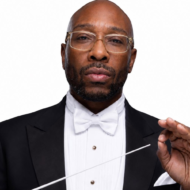
Image note: Supporting jazz photographs are illustrative stock images and do not depict Antoinette Montague or the listed performance. The lead photograph remains the artist’s official image. Event details should be reconfirmed with the presenter.